

Introduction
The event industry is moving faster than ever. What worked just one or two years ago might already be an afterthought by 2025. Between AI, hyper-personalization, and hybrid event models, marketers can no longer make a living off outdated event promotion methods. If marketers want to see success, they’ll need to cut through the noise by employing strategies that are based on real data, emerging technologies, and audience-first thinking.
In this blog, we look at the most impactful event marketing strategies you’ll need to be aware of in 2025. You’ll learn everything from data-driven event marketing and retargeting best practices to the most practical examples of AI in event marketing and more. You’ll learn practical tools to make the most out of your spending, provide truly awesome attendee experiences, and maximize ROI. Whether you’re doing large-scale conference promotion or virtual event marketing strategies, or small B2B gatherings, you’ll be able to leverage the content in this blog.
The New Era of Data-Driven Event Promotion: What’s Changed in 2025?
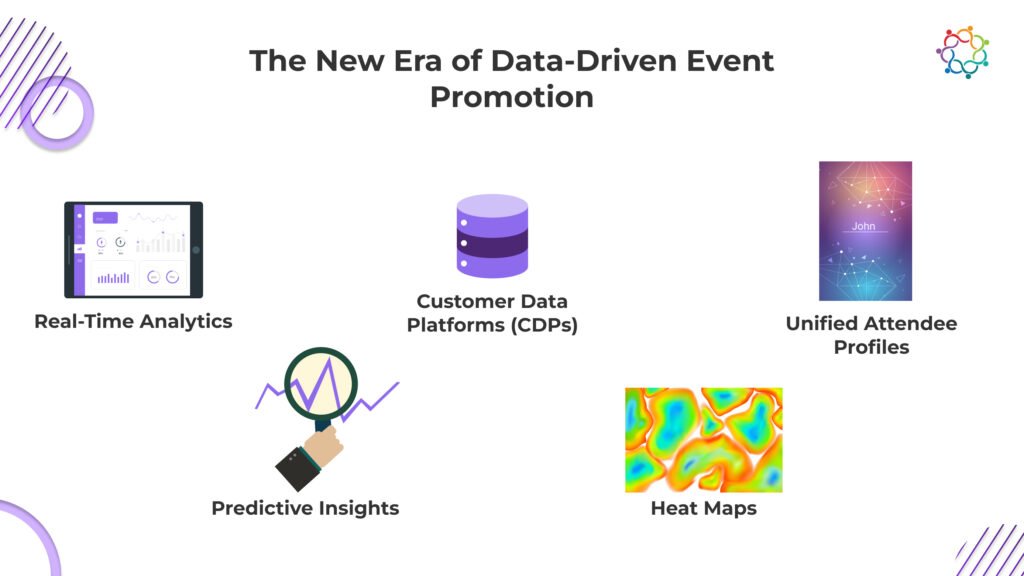
No longer are event marketers dependent on only instincts, good feelings, or even vanity metrics like registrants, in 2025, effective marketing strategies incorporate real-time data, predictive analytics, and insight at a company-wide level.
Beyond Basic Analytics: Real-Time Insights & Predictive Power
Modern event platforms provide much more than just a report on registrations. Marketers can now determine how many clicks happened in-platform, how many actually attended sessions, how much content was engaged with, and can even see heat maps of attendee behavior when various kinds of events are implemented.
Predictive analytics provided marketers with great insights so they can predict attendance rates, alongside which sessions they may expect to have more attendees show up. When considering attendee engagement, predictive analytics can alert marketers to possible attendee churn risks to allow them to affect programmatic or marketing changes before a problem occurs.
Customer Data Platforms (CDPs) have become a great asset, since through one-ever increasing source of truth for every attendee through the collating of data from CRMs, social media feeds, event apps, and websites, segmentation and personalization become much more effective.
Hyper-Personalization at Scale
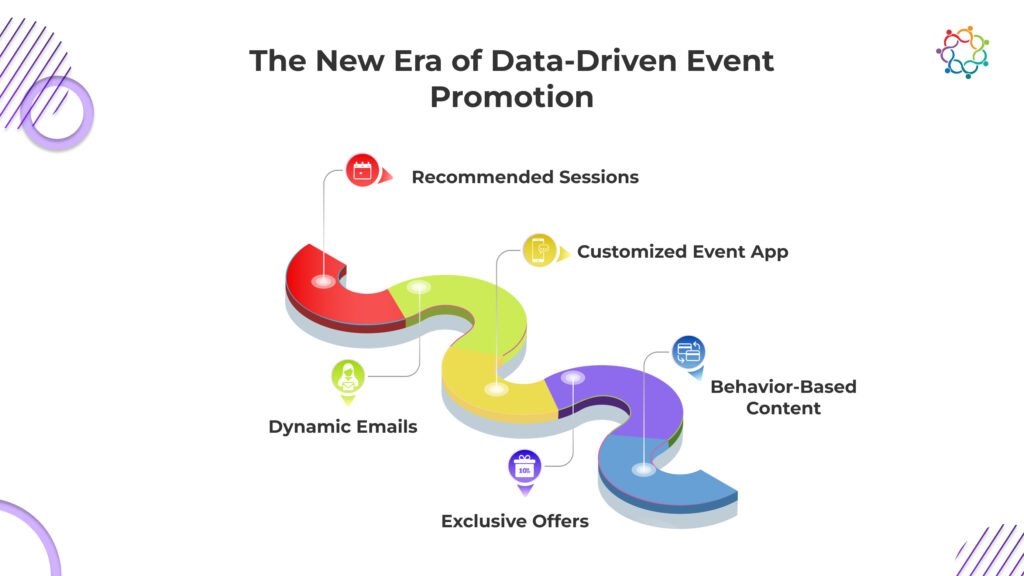
2025 demands more than simple segmentation. With unified data, marketers can create highly individualized attendee journeys, recommending sessions, networking opportunities, and relevant content based on user profiles and real-time behavior.
With dynamic content delivery, email messages, event websites, and apps can dynamically adjust based on the user’s areas of interest. If a registrant shows interest in a keynote speaker, for instance, they may receive their own notifications, articles related to this keynote speaker, and further exclusive meet and greet opportunity messaging.
Enhanced ROI Measurement & Attribution
ROI is no longer just about leads. In 2025, event success is equally measured by Return on Relationships (ROR) tracking attendee satisfaction, brand loyalty, and long-term community engagement.
In 2025, event marketing no longer operates in isolated silos. Today’s buyers and attendees interact with multiple touchpoints before making decisions, from clicking a social ad, attending a webinar, visiting a sponsor booth, reading a blog post, engaging with emails, to finally registering or converting post-event. Traditional attribution models that only credit the “last click” fail to capture the complexity of this journey.
Multi-touch attribution offers a much broader perspective. You can assign value to every significant touch that plays a part in the attendee’s decision and acknowledge that many marketing efforts, across channels and over time, work together cumulatively.
For instance, if a prospect first learned about the event through a LinkedIn post, saw an email follow-up, then encountered remarketing ads – and then ultimately registered the event after a personal invitation, you can credit the entire process!
To power this level of insight, marketers are leveraging:
- Advanced Attribution Dashboards: Unified platforms aggregate data from CRM systems, email platforms, paid media, social media, event apps, and website analytics into a single view, allowing marketers to analyze full-funnel performance at both the individual and campaign level.
- Beacon Technology for Physical Events:
Alongside small Bluetooth devices strategically placed throughout the venue, beacon technology tracks attendee movement, capturing booth visits, session attendance, and dwell time, to generate real-world behavioral data. This data feeds into attribution models that reveal which parts of the in-person experience drove the most engagement and conversions. - QR Code Tracking:
Complementing beacons, QR codes placed at booths, entry points, and session halls offer another layer of insight. When scanned by attendees, these codes log touchpoints in real time, enabling organizers to map interests, track content engagement, and analyze attendee journeys with precision. Together, beacons and QR codes create a comprehensive picture of how attendees interact with your event environment. - Integrated Analytics & AI Modeling: Modern analytics tools use AI-powered modeling to identify hidden patterns in complex attendee journeys, helping marketers optimize spend across channels and prioritize the tactics that deliver the highest ROI, not just in registrations, but in long-term relationship building.
In 2025, event marketers can fully endorse multi-touch attribution to gain unparalleled transparency and clarity around the true effectiveness of their work. With clarity and transparency comes the ability to allocate budgets effectively, personalize audiences purposefully, and have the marketing, sales, and event operations teams on the same page as they connect to drive conversions (in the short term) and loyalty (in the long term).
Retargeting Tactics That Bring Back Interested Attendees in 2025
Retargeting remains one of the most effective tools in an event marketer’s toolkit, but in 2025, it’s smarter, more segmented, and more omnichannel than ever.
Sophisticated Audience Segmentation for Retargeting
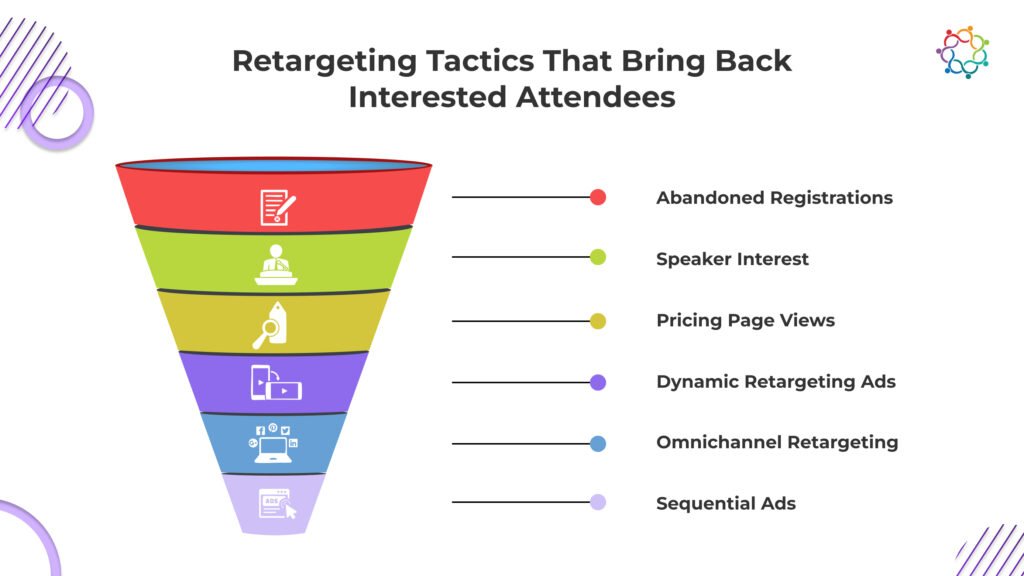
Today’s event marketers segment audiences into much smaller, highly granular audiences instead of embarking on broad retargeting lists. They target visitors who abandoned the registration process, past attendees who have not yet registered for the current year, prospects who viewed only specific speaker profiles, and pricing pages, and even attendees that engaged with only certain sessions or sponsors during a previous event. Marketers can automate retargeting as event registration was triggered with respect to specific behaviors. An example is downloading an event brochure or displaying interest by clicking on pricing information without completing a registration.
Dynamic Retargeting Ads with AI-Driven Personalization
AI enables highly customized retargeting ads:
- Ads showcase sessions, speakers, or topics the prospect previously engaged with.
- Offers vary based on engagement: Early bird pricing for high-interest segments; exclusive discount codes for those who abandoned their cart.
- Cross-platform consistency ensures the same messaging appears across email, social media, and display ads for a seamless experience.
Omnichannel Retargeting & Automated Workflows
The best event marketing will be occurring in 2025. It will use multiple channels at the same time to let prospects engage with the event wherever they are in the attendee journey. Email retargeting serves these people by sending abandoned registration emails or sending personalized follow-up content based on the user’s previous actions. Social media retargeting accomplishes the same thing using sophisticated advertising tools like Facebook Custom Audiences and LinkedIn Matched Audiences to serve a very hot group of interested followers.
You will continue to see video retargeting as marketers use inviting short videos through ads on platforms like YouTube, TikTok and Instagram Reels to grab people’s attention and spur action. A final retargeting strategy called sequential retargeting, offers a deliberate order/series of ads that tell a story, or build excitement and urgency for marketing events based on the progression leading up to the day of the event. Each interaction will push the prospect closer to registered attendees, and consequently engagement in the future.
The Role of Frequency Capping & Ad Fatigue
With so much personalization, it’s critical to prevent ad fatigue. Frequency capping ensures prospects aren’t bombarded, keeping engagement high and maintaining positive brand sentiment.
Experimenting with AI-Powered Event Copywriting & Content Creation
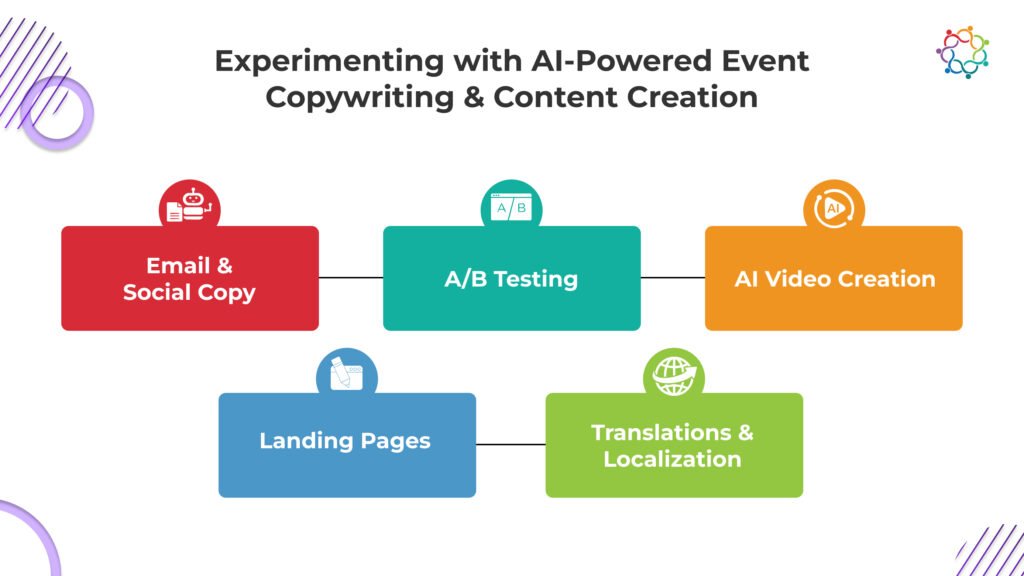
AI is no longer a future concept in event promotion, it’s now a daily tool for leading marketers.
Beyond Basic Generation: AI for Optimization & Personalization
Marketers use AI for first-pass drafts of:
- Email subject lines and body copy.
- Social media posts.
- Event landing pages and session descriptions.
- Speaker bios and video scripts.
AI models trained on brand tone ensure messaging stays consistent across channels.
AI also supports rapid A/B testing by generating multiple variations of copy, allowing marketers to quickly identify which versions resonate with different audience segments.
Scaling Content Creation & Personalization
With AI, marketers can personalize at scale:
- Create thousands of customized invitations or agenda recommendations in minutes.
- Localize content into multiple languages or regions instantly.
- Generate dynamic follow-up messages based on attendee behavior during the event.
Practical AI Tools & Their Applications
Today, marketers are employing a variety of Large Language Models (LLMs), like ChatGPT and Jasper for brainstorming and content creation, as well as summarizing text. As for design, AI tools like Canva AI and Adobe’s AI capabilities enable marketers to develop banners, social images, and presentation slides for events quickly and effectively. When it comes to video, AI-generated promotional videos are possible using avatars, autogenerated scripts, and speech synthesis that can drastically improve the efficiency of the entire production process.
The Human Element Remains Crucial
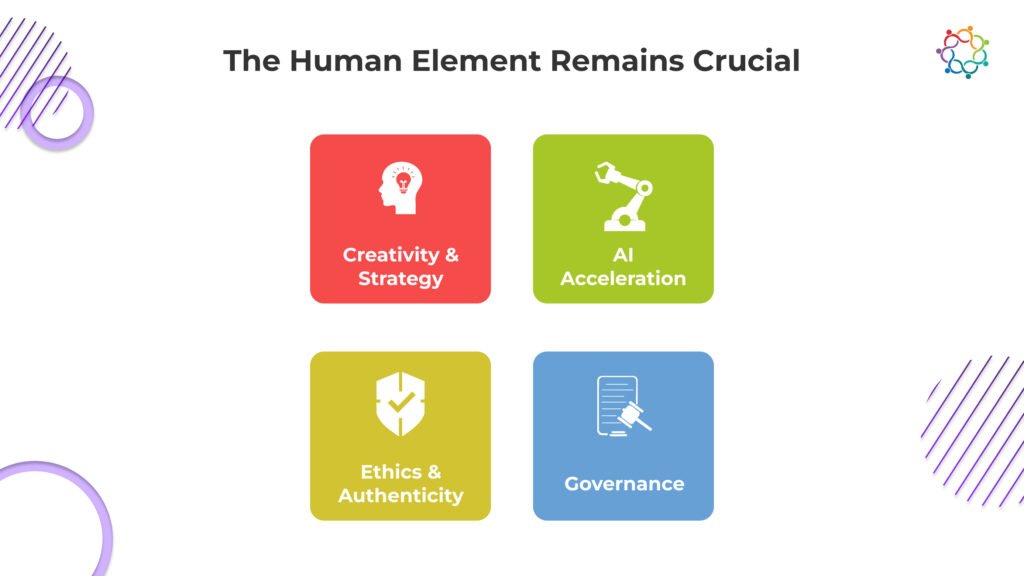
While AI accelerates content creation, human oversight is irreplaceable for creativity, empathy, and strategic alignment. Ethical considerations around data use, bias, and authenticity also require careful governance.
Future Outlook: Staying Ahead of the Curve
The event marketing strategies that will dominate 2025 and beyond are clear:
- Data-driven decision making powered by real-time and predictive analytics.
- AI-powered personalization to engage attendees more effectively.
- Advanced retargeting techniques across multiple platforms.
- Hybrid models blending virtual convenience with in-person connection.
But while technology is advancing rapidly, the heart of every successful event remains unchanged: meaningful human connection.
Conclusion: The Future of Event Marketing Lies in Balance
In 2025, event marketing is no longer rule-based, but rather agile, innovative, and precise. The ability of marketers to utilize real-time, predictive data enables them to glean event attendee behavior and adjust their modelling accordingly. AI is developing new levels of personalization and unique relevance for individuals, while omnichannel retargeting keeps the conversation happening on all platforms and devices. Hybrid formats are a mainstay, combining the broader reach of virtual with the intimacy of human interaction in face-to-face or in-person events.
But amid all this, one thing does not change: meaningful human connection is at the heart of a successful event.
Technology is the enabler, but memorable experiences, impactful interactions, and genuine community building are the true drivers of sustained success.
Event marketers who can balance between new technology and the focuses of attendee experience will be able to deliver measurable ROI, cultivate loyalty, and continue to deliver powerful and memorable experiences, so whether you’re experimenting with AI-driven content or refining your retargeting campaigns, it’s important to lean on insights that go beyond hype. This detailed guide on event marketing in 2025 offers a realistic look at what strategies are delivering ROI this year.