
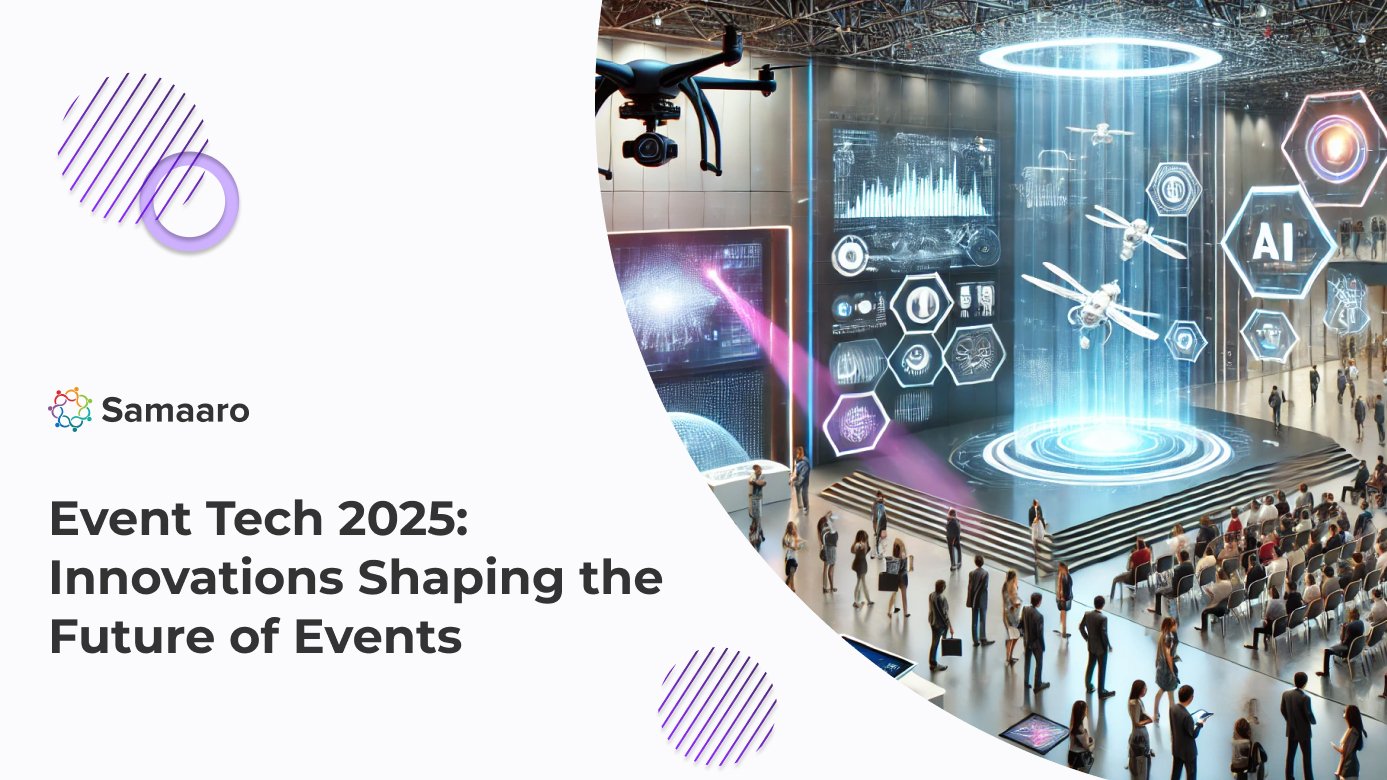

The event technology landscape is rapidly evolving and is influencing every facet of event planning, execution, and experience. From AI-powered matchmaking to immersive AR/VR experiences, technology is elevating the attendee experience and influencing how success is measured by industry professionals.
As we look toward the year 2025 the adoption of advanced event technology is no longer an option, this has become an avenue to stay ahead of the competition. In this blog, we share the most exciting event technology trends and predictions that will shape the future of events resulting in better engagement, improved networking and better ROI for organizations and attendees alike.
AI-driven event matchmaking and networking tools

Connecting people at events, while it sounds like an easy task, is one of the hardest tasks for event professionals to champion, but it’s something event attendees expect. Traditional networking often relies on random meetups, social media, or manual/flipbook searches that can result in missed connections and opportunities. AI is introducing intelligent event networking and has also become a quiet but trustworthy ally in building value-based connections between people based on interests, expertise, and goals.
Key innovations in AI-driven networking
- Intelligent Matching
AI algorithms are scouring through attendee profiles, prior interactions, and preferences to create highly valuable connections. AI algorithms streamline the work by investigating numerous data points such as job title, industry background, mutual connections, even past networking and behavioural habits, etc. Attendees can now join with their values intact, and avoid guesswork, awkwardness etc. now the right people are easily meeting the right people. - Personalized Recommendations
AI Algorithms do not just facilitate two-party matchmaking but provide value add to the experience by suggesting relevant sessions, experts, and networking opportunities. AI utilizes identification, tracking and analytics for live data collection of every attendee’s behavior and engagement, and creates suggestions based on interest, maximizing event potential based on attendee engagement. - Smart Networking Platforms
AI powered event apps incorporate predictive analytics and natural language processing (NLP) to make interactions simple. AI driven chatbots, real time engagement tracking of attendees, automated follow up suggestion, and other features level up the interactions and engagement. Some platforms even offer icebreaker suggestions to start meaningful interactions with attendees.

Want to see how this would work for you?
See AI-powered event tech in action
30 minutes on Samaaro: real-time engagement signals, intent scoring, and instant follow-up.
Book a tailored walkthroughWhat AI Means for Attendees vs Organizers
For Attendees:
- More valuable connections – Meet the right people based on their business goals, interests or expertise.
- Targeted learning experiences – Attendees maximize their time with AI automation for sessions and speaker recommendations.
- Enhanced event experience – Smart networking tools because they simplify starting importantly and maintaining mutually beneficial relationships.
For Organizers:
- More attendee engagement – AI networking engagement results in higher levels of interaction and participation making events more engaging and dynamic.
- Timely insights – Networking success for organizers can be measured in real-time, attendee satisfaction can be measured, and data driven improvements can be made.
- Better event ROI – Successful attendees and positive matches are based on recommendations and electrifying connections enhance satisfaction and allow brand connections to flourish in future endeavours.
As AI emerges as a common denominator in the event matchmaking and networking process, planners can elevate their events into dynamic purpose-based hubs of meaningful engagement and ensure they leave with the key connections and insights from beyond the event.
Smart Badges & Wearables as a Part of Seamless Event Experiences
Smart Badges & Wearables as a Part of Seamless Event Experiences
Event technology has been evolving rapidly and smart badges and wearables are continuing to provide value to attendee experiences and contribute to meeting planner operational efficiencies. These wearables are changing the way that organizations plan event logistics; they are speeding up check-ins, making networking easier, and giving a better picture of data collection.
Key Innovations in Event Wearables
- Contactless Check-in & Access Control:
The smart badge is a wearable that has RFID (Radio Frequency Identification) or NFC (Near Field Communication) technology. This badge gives a contactless check-in. Attendees will simply tap their badge to enter the venue; they don’t have to pay attention to long lines or having somebody check their credential.
- Real-time Location Tracking:
Organizers can utilize wearables that can be tracked using IoT-enabled standards for their attendees to monitor their movements throughout the event. The data can tell organizers which sessions shared the highest attendance, which exhibitors received the highest traffic, or where the attendee clusters were through the event.
- Personalized Delivery of Content
Smart badges and wearables can be interfaced with event apps to allow event planners to notify event participants based on their preferences and behaviour. Based on the information gathered, the system can notify the event participant on information on sessions, networking opportunities, and exclusive offers to ensure that each participant participates in a personalized event experience.
- Interactive Experiences
Smart wearables enhance gamification and audience engagement capabilities. Attendees can respond to live polls or other networking activities such as scavenger hunts or reward-based networking activities via their badges. A few events have even livened event experience through badges with LED capabilities that change colour to reflect their desires to network with another attendee.
- Data Collection & Analytics
Every interaction made with a smart badge brings valueable insights. Overall, organizers can track engagement, which attendees are engaged at sessions, and which booth locations are receiving visitors, allowing organizers to learn something which can be incorporated to improve their strategy at future events.
- Privacy Considerations
As with any technology which collects attendee data, security and privacy is critical. Smart event platforms lead with security demonstrations and by ensuring that all data collected (from badge deployments and registration) is encrypted. They can also offer opt-in tracking options for all purposes of attendee data collection, security, and personalization.
Why Smart Badges Are Revolutionizing Events
For Attendees:
- Faster, hassle-free check-in and access control
- Personalized recommendations for sessions and networking
- Participatory, interactive events
For Organizers:
- Better event execution + better crowd control
- Real-time access to valuable insights that can be used to adjust strategy moving forward
- Better security and evidence of proper protocols
Smart badges and wearables have transitioned from a clever tool that makes life easier, to an essential tool for delivering a frictionless, data-driven, and engaging event for attendees.
Augmented/Virtual Reality Experiences That Enhance Engagement

Augmented Reality and Virtual Reality are driving attendee engagement in events. They create immersive, and interactive environments. Attendees need to see the technology presented in a non-traditional event format, providing for deeper engagement, expanded – value networking, and more memorable attendee experiences.
Key Advances in Augmented and Virtual Reality for Events
Immersive Product Demonstrations
AR and VR-powered booths allows for attendees to experience the brand or product in a fully interactive 3D space. Rather than just being shown some static displays, attendees can interact with product features, be exposed to functionalities and even watch real-world situations- all without needing a physical sample. This applies to businesses like automotive, real estate and tech where the hands-on experience is impactful.
Virtual Venue Tours
Events can provide pre-event virtual tours via VR for attendees to see physical spaces, including exhibition halls, meeting rooms, and relaxation/networking lounges prior to arrival. This improves event planning and reduces obstacles to accessibility by making it easier for attendees to plan their schedules to maximize their time.
New Networking Opportunities
Virtual networking spaces offer new opportunities for hyperconnectivity through the experience of avatars and holograms bringing people together beyond geography. Virtual networking spaces simulate traditional face-to-face conversations with spatial audio and gesture-based communication with features like a virtual business card exchange to make virtual networking experiences more human-like, vibrant and compelling.
Gamified Experiences
Augmented reality and virtual reality are rewarding because they allow events to make their experiences more gamified than ever before. Attendees can join AR scavenger hunts, interact with challenges and compete in fun, exciting VR contexts that prompt attendees to explore through curiosity and engagement. These experiences keep attendees engaged but also create tours of experiences for foot traffic in desired locations as an example in an exhibitor booth or sponsored activation.
Training and Education
We are seeing an uptick in VR-powered training modules expanding learning formats from conferences and workshops. Attendees can get engaged in simulations with hands-on activities, practicing real-world scenarios, or interact with 3D models that help recall information, etc. Many industries such as healthcare, engineering, and aviation are employing VR-based experiences to practice in a secure and risk-free training format.
Why AR/VR is Transforming Events
For Attendees
- Engaging, interactive experiences at events.
- Hands-on learning through immersive training.
- Unique networking experience with virtual networking meetups.
For Organizers
- Attendee engagement that translates into brand/organization recall.
- Opportunity to differentiate, offering unique innovation and experiences.
- Knowledge that with these AR and VR experiences, remote and hybrid event participants feel included and can easily join.
AR/VR allow event organizers to create unforgettable experiences by combining the physical and digital realms, allowing engagement and excitement for attendees throughout the entire time experience!
Innovating in Metaverse Events

Virtual Spaces for Events
No event is ever again limited to a physical space. The Metaverse allows you to rely on an engulfing 3D virtual space and build it entirely from scratch! And attendees can enter from anywhere on earth! The Metaverse allows speakers to enter a virtual exhibition hall; sit in on a keynote; interact with booths and crowdsource, and more.
- Avatar Networking
Well, your guests won’t just be looking at a screen, they will interact through customizable digital avatars. Which makes networking exciting and creative. The avatars can move around the space, find others, chat with voice or text, present themselves to others in ‘a more engaging way,’ participate in group chat and/or video, etc.
- Hybrid Events in the Metaverse
The Metaverse can link an audience in a physical location to participants in a virtual space. The two groups can, together, share a real, interactive, ‘live’ experience. Participants in a physical venue may interact with the virtual audience through holograms, VR powered meetups, or the ‘digital twin’ of the metaverse.
- Challenging Opportunities
Although there has been exciting innovation in this area, there still remains enormous potential for the industry to engage in Metaverse events that have obstacles to adoption, including:
-Accessibility. Not all the attendees can afford VR headsets or have the internet speeds to truly engage.
-Cost. While some companies and businesses are investing substantial capital in developing and maintaining metaverse environments, it will make it nearly impossible for smaller events.
-Learning Curve. Either attendee, as well as organizers have not found the entry into the metaverse (using a 3D space that has avatars) easily navigated and there remains an educational state of need, particularly for attendees.
Why the Metaverse Is the Future of Events
For Attendees:
- Immersive and interactive experiences.
- Expanded networking that would be limited by physicality.
- Ability to attend events happening anywhere globally without travelling there.
For Organisers:
- Increased audience reach and engagement.
- Sponsorship and monetization opportunities.
- Powerful crowd behaviour data while in a virtual environment.
The metaverse is not just a fad; it is part of the future of events, inextricably linking the regretful distance between digital and physical interactions – unlocking extraordinary experiences.
Sustainability + Event Tech
With sustainability taking a priority, event tech is providing solutions to help reduce the environmental impacts of in-person and hybrid events. These tech-driven solutions eliminate harmful waste, reduce energy consumption, and provide opportunities for better sustainability-oriented events.
Key Developments in Sustainable Event Tech
Green Event Planning
More digital solutions are replacing printed materials, significantly reducing paper waste. Event apps, virtual itineraries, check-ins using QR codes, and digital registration options cut down on printing physical tickets, brochures, and handouts. In short, they increase sustainability in events.
Virtual and hybrid events
Event Organisers can significantly reduce airport emissions by offering specimens of remote attendance opportunities. Hybrid events mean organisers need fewer people travelling long distances while maximising global audience attendance, discussion, and networking in a real-time experience.
Sustainable Event Apps
Many event apps now have sustainability-focused features, such as carbon footprint tracking features, green travel suggestions and digital exhibitor content. Some platforms even compensate attendees for demonstrating sustainable behavior such as using public transportation or bringing reusable materials.
Data-Based Knowledge for More Sustainable Experiences
AI-enabled analytics tools can help you measure and reduce your event environmental impact. Organizers can track energy use, waste generation, and attendee mobility to make more informed decisions about the place, catering, and use of resources.
Why Sustainability Has Importance to Events
For Attendees:
- Less paper and plastic waste.
- More sustainable event experiences.
- Options for remote attendance, which lower carbon footprints associated with travel.
For Organizers:
- Reduced operating costs via digital-first planning.
- Enhanced brand perception and staying true to their sustainability strategies.
- Access to data-enabled insights related to options for greater event sustainability.
Using event tech for the purpose of sustainability, organizers can implement sustainable activities and experiences without losing engagement or efficiency.
The Growth of Event Data, Reporting and Analytics
Event data has manifested into one of the most valuable assets to help organize an event that can result in a more meaningful and engaging experience for attendees and best value for the organizer. Enabled by AI-driven insights in more recent years, the tools to capture or monitor event outcomes provide real-time tracking or reporting that helps event planners leverage data to make data-based decisions to enhance any event.
Key Developments in Event Data & Analytics
Applying Real-Time Data
Many events are leveraging IoT, RFID badges, and event apps to monitor participant movement, attendance and data related to participation in sessions and activities. For example, real-time data enables an organizer to make quick decisions on items such as adjusting how the room is set up, adding another hour to networking or assessing the usage of areas in that space. Predictive Analytics
Personalized Insights
Attendees today expect the ability to customize their experiences. Using an AI-based event platform provides suggestions about potential recommendations based on their level of interest, the number of sessions they have participated in (finding their favourites), and engagement level(rankings). The attendee has personalized suggestions based on sessions that are related to their original choices and potentially engaging sessions they would not have previously considered.
Data Visualization for Decision-Making
Interactive dashboards provide event planners ways to visualize complicated event data. Real-time heatmaps, attendee sentiment analysis, post-event reports offer value based easy to read summaries; events can consider this down the road so it could help improve their future event strategy.
Why Event Data Is Changing the Landscape
For Attendees:
- More personalized experiences.
- AI-based event recommendations on relevant sessions and connections.
- More opportunities to give real-time feedback and engage with planning parties/media.
For Organizers:
- More intelligent decision-making with predictive insights.
- More attendee engagement and satisfaction.
- More return on investment because of data analytics and recommendations.
Through event insights and analytics, planners can better develop their outline of their events to be more engaging, more efficient, and recognized for its impact.
Conclusion
The event industry is primed for the technological revolution that will be released over the next few years. As we consider the event technology landscape in 2025, we will see more personalized, engaging, and utilizing data-based events.
At Samaaro, we are helping to meet and event planners with AI-enabled marketing, smart networking, and analytic capabilities – to plan high-impact events. If you want to optimize your engagement opportunities, efficiency in operations or assure your event is successful, Samaaro’s event technology solutions can keep you ahead of the game. Book the demo today to see how you can elevate your events to the next level with enabling event technology.
Frequently Asked Questions
1. How does AI-driven matchmaking improve networking outcomes at events?
AI-driven matchmaking analyzes attendee profiles, goals, and behavior to recommend high-fit connections and schedule meetings, producing far better networking outcomes than chance encounters.
2. What are smart badges and wearables, and how do they improve the check-in process?
Smart badges use NFC or RFID chips for tap-based check-in, session tracking, and contact exchange. They cut entry queues dramatically and capture attendance data automatically.
3. What are the benefits of using AR and VR for product demonstrations at events?
AR and VR let attendees experience products immersively, exploring complex machinery or spaces virtually. Demos become memorable, space-efficient, and possible for products too large to ship.
4. What role does the metaverse play in hosting fully virtual or hybrid events?
The metaverse hosts fully virtual or hybrid events in 3D venues with avatars and immersive networking, going well beyond flat video calls for remote attendees.
5. How does real-time data and predictive analytics improve event decision-making?
Live dashboards flag issues instantly during the event, while predictive analytics forecast attendance and engagement. Together they let organizers make smart decisions on the fly.