
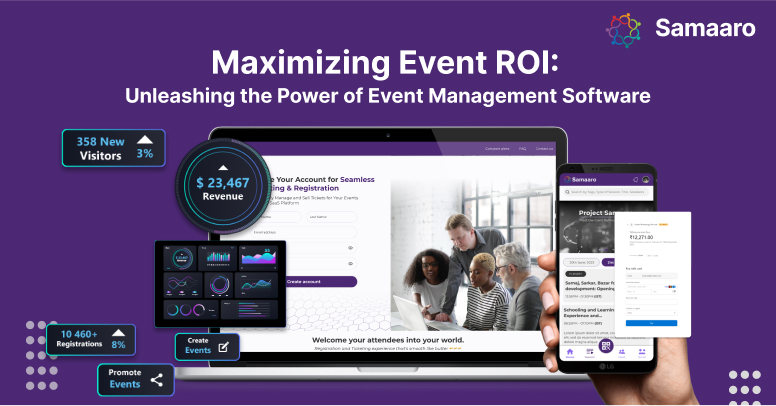

In today’s competitive business landscape, organizing successful events is crucial for companies to achieve their goals. Whether it’s a corporate conference, trade show, product launch, or a marketing event, the importance of maximizing Event Return on Investment (ROI) cannot be overstated. Every event represents a significant financial and resource investment, and understanding how to drive success is paramount to reap the desired benefits.
Importance Of Maximizing Event Return on Investment (ROI)
Return on investment (ROI) for an event is not solely financial. Generating revenue and increasing profits are important, but successful events also contribute to brand building, networking, lead generation, and customer engagement. Maximizing ROI for an event allows organizations to tap into the totality of the opportunities that existed, driving long-term business growth and a competitive position in the marketplace.
Factors that Contribute to Event ROI

There are a number of factors that can contribute to the overall success of an event, and thus its ROI. These elements may include:
- Clear Objectives: Before ever beginning to plan an event, developing clear and measurable objectives is paramount. Whether it’s increasing sales, increasing brand awareness, or launching a new product, defining objectives aligns all activity related to the event toward a common goal.
- Efficient Planning and Execution: Planning well in advance for an event and executing things flawlessly goes a long way. Everything from selecting a venue, managing logistics, coordinating content, booking high-profile speakers or exhibitors, or anything else requires significant attention to detail.
- Attendee Engagement: Engaging with the audience before, during, and after the event creates a greater experience and lasting relationships. Taking advantage of innovative communications technologies and engaging activities can elevate attendee satisfaction with the event.
- Cost Management: To maximize ROI, it’s important to manage costs, but without sacrificing the quality and impact of the event. Smart budgeting and negotiation with suppliers is critical to appropriately use resources.
Challenges in Measuring Event ROI
Quantifying event ROI can be challenging due to many of the intangibles involved with events. Several challenges arise with regards to:
- Attribution: Determining what aspects of an event directly contributed to particular results is difficult. For example, it may be difficult to know what part networking opportunities or other individual sessions played in generating leads.
- Collection of data: Accurately collecting data on attendee behaviors, post-event actions, and event success can feel cumbersome, absent the appropriate tools and technologies.
- Time: Event ROI may not be immediate, as some benefits will be realized over the long-term. This can be difficult to determine since delay means it is challenging to determine whether the event was a success.
This is where event management software plays an important role and can help to overcome many challenges associated with maximizing the ROI of your event by utilizing technology to simplify the planning process, execution of the event, and analysis.
The Impact of Event Management Software on ROI

Event management software is instrumental in driving the success of events and ROI. It provides a comprehensive set of tools and features and can streamline the event planning, organization, marketing, and engagement process. Event planners can strategically make decisions, better attendee experience, and ultimately reach their goals by utilizing technology, an example of these tools is event management software.
Streamlining Event Planning and Organization
- Efficient project management and task allocation: there are project management capabilities in event management to allow collaboration on this with your team. You will have the capability to assign tasks and responsibilities, put deadlines in place, and be able to measure to see progress is being made so you stay on pace and are prepared with everything needed for the event day.
- Centralized documentation and event data: Storing all event-related data and documentation in one centralized site reduces the likelihood of misinformation and data loss. It allows whoever on the team to instantly access any important information that is needed, making it easier to coordinate and make decisions.
- Sponsor, speaker, and exhibitor management tools: Event management software makes it easier to manage times and data related to sponsors, speakers, and exhibitors. Tools are provided to track communications, agreements, and deliverables to ensure that all parties have a seamless experience when working together.
Enhancing Attendee Registration and Ticketing Processes
- Seamless online registration and ticketing platforms: Modern event management software offers user-friendly online registration and ticketing systems. Attendees can easily sign up for the event, select preferred sessions or activities, and make secure payments, resulting in higher registration rates and reduced drop-offs.
- Automated confirmation and communication processes: Automated confirmation emails and communications are triggered upon registration or ticket purchase. This not only provides a professional touch but also keeps attendees informed about event details, creating a positive first impression.
Optimizing Event Marketing and Promotion
- Segmentation and personalization of messaging and autoresponder emails: Event management software provides measurable insights from email campaigns. They allow the organizer to segment the attendees and begin personalized autoresponder emails. Creating a more relevant messaging, whether it was by attendee preference, and previous interactions, drives better engagement and greater conversions.
- Integrated social marketing and digital ad features: Third-party social marketing, digital ads, and digital marketing platforms extend marketer efforts. Social media and digital ad tools allow marketers to expand their efforts for reaching audiences, drive excitement and interest, and convert them into registrations through various means.
Improving Attendee Experience & Engagement
- Interactive event applications and engagement solutions: Event management software typically incorporates interactive event apps that provide a wealth of opportunities for attendee engagement. Examples of these functionalities include live polling, Q&A periods, and interactive maps. These types of features will make the event feel interactive, more pleasurable, and enjoyable for the participants.
- Networking & engagement in the community: Event management software provides mechanisms to facilitate the networking of peers, exhibitors, and speakers among attendees. Developing a sense of community will bolster the attendees overall feeling and entice them back to future events.
In conclusion, event management software is truly a powerful vessel in maximizing event ROI. Event management software simplifies and organizes the planning process, simplifies the registration process, and manages the marketing process in parallel with the event to maximize attendee experience and engagement. This process allows event organizers to design and produce successful events that offer quantifiable outcomes for the attendee and leave a lasting impression on attendees and stakeholders. Employing technology-driven solutions is critical to competitiveness with the fast-paced changing world of events while generating success for businesses and organizations themselves.
Key Features of Event Management Software for Maximizing ROI
Scalability
Scalability is an essential feature of event management software in terms of flexibly adjusting its capacity to meet events that vary in size or complexity. Whether you are organizing a small workshop, or a large-scale conference, the software should be able to meet the needs of the point of reference regardless and provide an organized manner through and through. Scalability allows event coordinators to accommodate more attendees and data without sacrificing performance and user experience.
Personalization
In event management, personalization is a growing priority for improving attendee satisfaction and engagement. Event management software that can accommodate personalization adjusts the event experience according to individual participant preferences. This can range from personalized agendas to recommendations for sessions/activities, to personalized communications. By enhancing the experience with personalized features, organizers can create stronger connections with participants and increase satisfaction, which leads to greater ROI.
Integrations
A key component of event management software is seamless integrations with other business tools.
- CRM: The ability to integrate with customer relationship management and marketing platforms enables event coordinators to sync contacts, track interactions, and facilitate lead nurturing.
- Payment Integration: Likewise, payment integrations with common payment gateways mean that attendees can securely and easily pay for their transactions, minimizing payment-related frustration and increasing registrations.
Analytics & Reporting
- Tracking key performance indicators (KPIs): Event management software tracks key performance indicators (KPIs) to measure successful events, such as registration to check-in ratios, overall session engagement using polls and feedback, connection requests, pre-scheduled meetings, leads for exhibitors/sponsors, and social media reach for the overall event. An event manager can track these data points in real time to make data-driven informed decisions, identify opportunities for improvement, and showcase impact to stakeholders.
- Creating comprehensive reports for an event: Detailed comprehensive reports evaluate an event’s performance and ROI. Event management software can produce those reports, saving a significant amount of time and effort. Event organizers can analyze feedback from attendees and participant data and assess measures of success against the organization’s objectives. Event management reports are a useful source of documentation for stakeholders, and event managers can use them to inform future event planning.
By discussing key features within the event management space, software can increase productivity, provide personalization, provide a streamlined process, and assess performance. When event managers have technology that supports and enhances each aspect of event management, and generates memorable and valuable experiences, then they will see improved event ROI.
Best Practices for Maximizing Event ROI with Event Management Software

Event management software can be a powerful tool for maximizing event ROI. By using event management software, you can:
- Set clear event objectives and measurable goals.
- Leverage data and analytics for informed decision-making.
- Implement post-event evaluation and analysis.
- Continuously improve and learn from past events.
- Leverage AI to automate tasks and improve efficiency.
Setting Clear Event Objectives and Measurable Goals
Before launching an event, it is essential to define clear objectives and set measurable goals. Event management software enables organizers to track key performance indicators (KPIs) such as
- Registration numbers: Track the number of attendees who register for the event.
- Attendee demographics: Gather data on the characteristics and profiles of the event attendees.
- Engagement levels: Measure attendee interactions with event content, sessions, and networking opportunities.
- Revenue generated: Keep track of the financial success of the event through ticket sales, sponsorships, and other revenue streams.
To maximize the event’s success, use event management software to set benchmarks and performance targets for each KPI, and align event strategies and planning with the defined objectives and goals, ensuring a focused and purposeful event.
Leverage Data and Analytics for Informed Decision-Making
Once you have set clear event objectives and measurable goals, you can use data and analytics to make informed decisions about your event. For example, you can use data to:
- Track attendance trends: This will help you identify which marketing channels are most effective in driving attendance.
- Identify your most engaged attendees: This will help you target your marketing efforts and content to the people who are most likely to be interested in your event.
- Measure the ROI of your marketing campaigns: This will help you determine which campaigns are most effective in driving leads and sales.
By using data and analytics, you can make better decisions about your event and improve your chances of success.
Implement Post-Event Evaluation and Analysis
After your event is over, it is important to evaluate your results and identify areas for improvement. You can use event management software to collect feedback from attendees, track sales leads, and measure the overall success of your event.
This information will help you improve your event planning process for future events. By continuously evaluating and improving, you can ensure that your events are more successful over time.
Continuously Improve and Learn from Past Events
The best way to maximize event ROI is to continuously improve and learn from past events. This means taking the time to analyze your data, identify areas for improvement, and make changes to your event planning process.
For example, if you notice that your attendance numbers are declining, you could try changing your marketing strategy or offering more relevant content. If you find that your attendees are not engaged, you could try changing the format of your sessions or adding more networking opportunities.
By continuously improving, you can ensure that your events are more successful over time.
Leverage AI to Automate Tasks and Improve Efficiency
Event management software can also be used to automate tasks and improve efficiency.
For example, you can use event management software to automatically send out confirmation emails, track RSVPs, and manage speaker payments. By automating tasks, you can free up your time to focus on other aspects of event planning.
This can save you a lot of time and energy, which can help you make your events more successful.
Conclusion
In conclusion, in today’s fast-paced and competitive landscape, investing in event management software has become a strategic imperative for businesses and organizations seeking to thrive in the events industry. With the right event management platform, such as Samaaro, event organizers can streamline their operations, enhance attendee experiences, and optimize resource utilization, ultimately leading to better returns on investment (ROI). From seamless registration and ticketing processes to interactive networking opportunities and real-time analytics, Samaaro empowers event organizers to orchestrate successful events that leave a lasting impact on participants and stakeholders alike. By leveraging the power of event management software, businesses can unlock new possibilities, drive growth, and stay ahead of the curve in an ever-evolving events landscape.
Frequently Asked Questions
1. How long does it typically take to see measurable ROI results after implementing event management software?
Most teams see measurable ROI gains within one to three events. Automation cuts labor costs quickly, while improved lead tracking compounds value over each event cycle.
2. How can smaller organizations with limited budgets still measure event ROI effectively?
Small organizations can track a few KPIs, cost per lead, conversions, and revenue influenced, using affordable platforms or spreadsheets plus free analytics. Discipline matters more than expensive tools.
3. What KPIs matter most when the event’s goal is brand awareness rather than direct sales?
For brand awareness goals, track reach, social mentions, media coverage, website traffic lift, brand recall surveys, and new audience growth rather than direct sales numbers.
4. Can event management software help forecast expected ROI before an event even happens?
Yes. Event management software can project expected ROI using past attendance, conversion rates, and pipeline data, helping teams justify budgets before committing spend.
5. What’s a realistic way to attribute long-term ROI when benefits appear months after the event?
Keep event tags on CRM records permanently and review influenced revenue quarterly. Many event-sourced deals close months later, so long-term attribution requires patience and consistent tagging.