
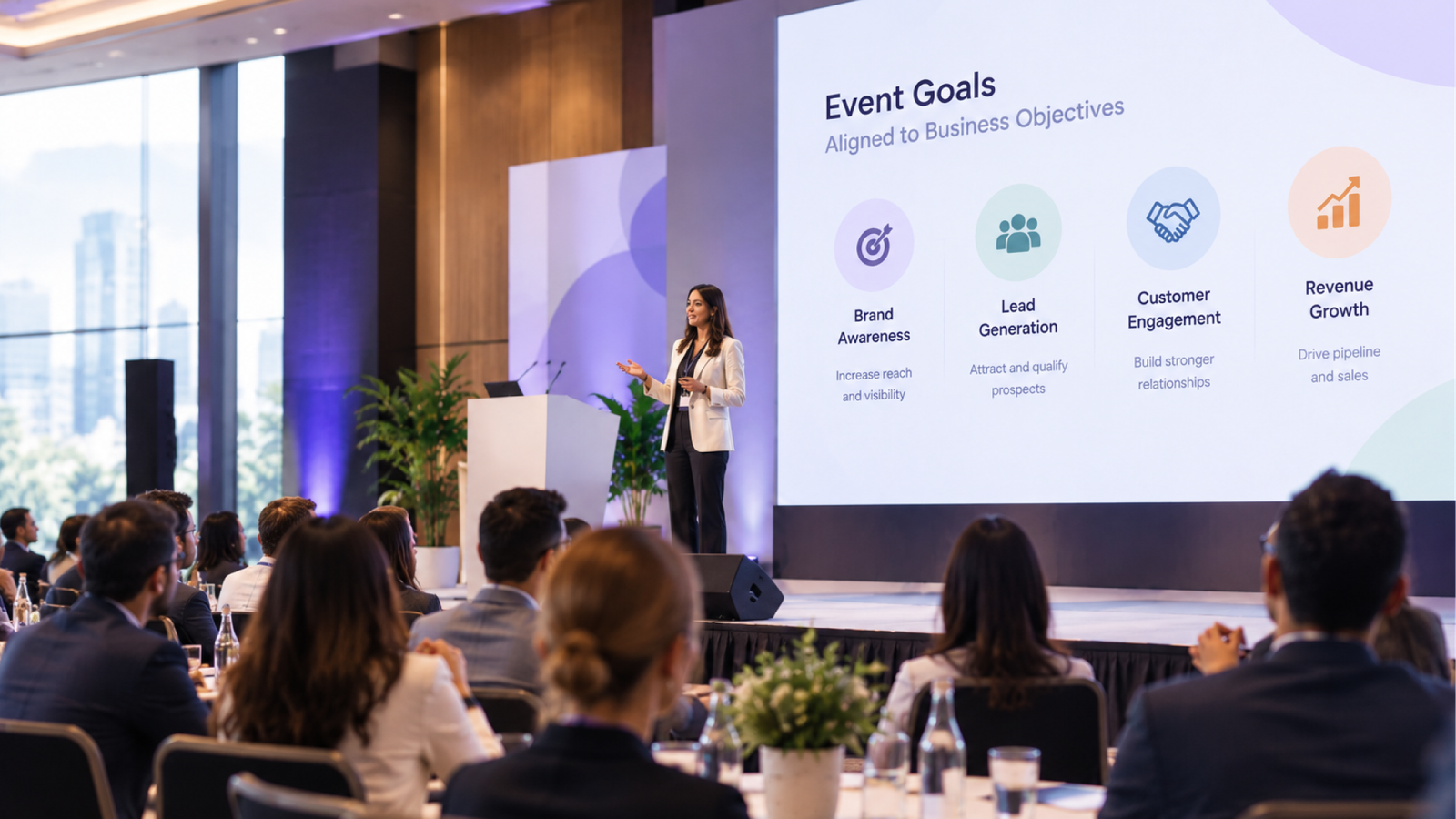

We have mentioned this before, but it is important to emphasise that before you start planning your event, the first step is to clearly define your event agenda and objectives.
Defining goals for your event and outlining the necessary actions to achieve them can offer several benefits. Firstly, it helps you clearly define what success means for your team. Secondly, it allows you to anticipate any potential challenges or areas where different components of the event may align. Thirdly, it helps you understand the specific numerical targets needed for profitability or breaking even. Lastly, it enables smooth communication of your event requirements within your organisation.
To determine your event agenda, it is important to document the purpose behind your event. During the planning phase of your goals, it is beneficial to engage in a series of inquiries to improve your understanding. The questions that are included are:
- What motivated your organisation to hold the event in the first place?
- What does your audience look like?
- What will motivate individuals in your audience to come to your event?
- What kinds of knowledge do your attendees expect to gain by the end of the event?
- Who are the important stakeholders who benefit from your event?
- What is important to your stakeholders a/b/c within your event?
- How would you measure your event being “successful” in the end?
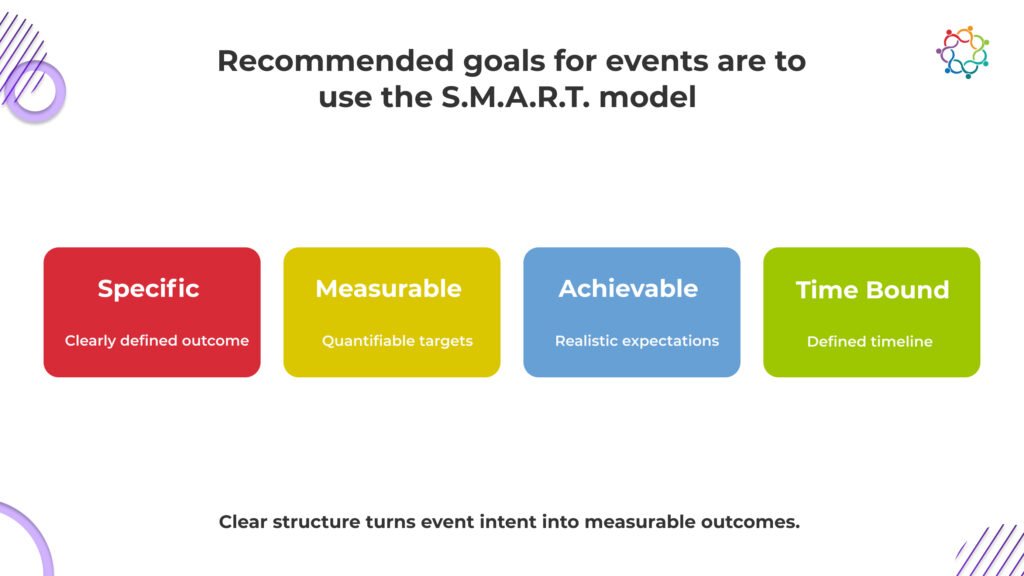
Recommended goals for events are to use the S.M.A.R.T. model. This tool is used to develop goals that are Specific, Measurable, Achievable, Relevant, Time Bound.This article will discuss an important set of goals that businesses should consider first before planning different levels of events. This article speaks to the importance of having a clearly defined event agenda. As an advertisement event can help create brand awareness and generate leads, an event will exist as a one piece of a larger marketing approach and not create reliance.
CONFERENCES
We have mentioned this before, but it is important to emphasise that before you start planning your event, the first step is to clearly define your event agenda and objectives.
Defining goals for your event and outlining the necessary actions to achieve them can offer several benefits. Firstly, it helps you clearly define what success means for your team. Secondly, it allows you to anticipate any potential challenges or areas where different components of the event may align. Thirdly, it helps you understand the specific numerical targets needed for profitability or breaking even. Lastly, it enables smooth communication of your event requirements within your organisation.
To determine your event agenda, it is important to document the purpose behind your event. During the planning phase of your goals, it is beneficial to engage in a series of inquiries to improve your understanding. The questions that are included are:
- What motivated your organisation to hold the event in the first place?
- What does your audience look like?
- What will motivate individuals in your audience to come to your event?
- What kinds of knowledge do your attendees expect to gain by the end of the event?
- Who are the important stakeholders who benefit from your event?
- What is important to your stakeholders a/b/c within your event?
- How would you measure your event being “successful” in the end?
Recommended goals for events are to use the S.M.A.R.T. model. This tool is used to develop goals that are Specific, Measurable, Achievable, Relevant, Time Bound.This article will discuss an important set of goals that businesses should consider first before planning different levels of events. This article speaks to the importance of having a clearly defined event agenda. As an advertisement event can help create brand awareness and generate leads, an event will exist as a one piece of a larger marketing approach and not create reliance.
CONFERENCES

Conference events provide an effective way to share knowledge, build professional connections and learn skills & insights specific to the industry. To maximise the benefits of conference events, businesses should establish their own event objectives:
- Knowledge Sharing: Inspire your attendees by carefully selecting sessions, workshops, or keynote presentations that you will share important knowledge, information and developments in and about your industry.
- Connections: Create opportunities for connections and meaningfully engage in networking opportunities with others attending, speakers and industry experts.
- Thought Leadership: Elevate your business as an identified thought leader by including renowned speakers and subject matter experts and subsequently sharing content that aligns with your expertise.
- Increase Brand Visibility: Use the conference to promote your brand’s visibility by showcasing your logo, using branded marketing materials and working on social channels to capture attention.
- Lead Generation: Collect contact information from interested parties to grow your lead database and develop future clients.
TRADE SHOWS

Trade shows are high-energy marketplaces where companies sell specific products and services to a targeted audience. Therefore, it is essential to formulate a well-planned agenda around the event to reap the most benefits from such high-energy events.
- Lead Generation and Sales: Trade shows are an excellent opportunity to connect with prospects. Set your scope and determine how many qualified leads you want to generate, and how many sales will be made at the stand, if possible. Come up with exciting exhibits, demonstrations, and interactive engagement, to draw attraction to your booth to be able to convert them to clients.
- Industry Networking: Our goal is to support the expansion of your network in your industry by connecting you with peers, suppliers and industry champions. Strong relationships can translate to collaboration opportunities, partnerships and insights that will only elevate what you do within your business.
- Increase Brand Visibility: Amplify the visibility of your brand by creating an innovative booth set-up that is aligned to your branding. It is our ultimate objective, above all else, to ensure the construction of great signage, branding units around the event, and a display of your products that will make an impression on the attendees of the event.
- Product Launch or Exhibition: Leverage the expo to officially launch or exhibit a new product, while also generating excitement and growing interest in your product and display. Develop product demonstrations, presentations, or sneak previews that excite the audience and keep them engaged.
- Industry Trends / Competitive Information: Conduct detailed research on your trade show competitors – their product, marketing strategy, and display. Use this information to create your own positioning, differentiation and market strategies for opportunity.
PRODUCT LAUNCHES
Congratulations! You are launching a new product and have evidence of planning in this process. A measure of success in launching your product is planful strategy and evidenced by a detailed plan of strategy. You will have a greater degree of success with an evidenced, measurable objective.
- Build Excitement and Interest prior to Launch: Build excitement and interest in the new product by timing teaser and promotional materials to be distributed ahead of the launch.
- Media Coverage: Using media coverage and the new product announcement build exposure of your product beyond your ability so scale within reason.
- Target Audience: The objective is to identify any key decision makers, influencers, and potential customers, to engage these key audiences with purposeful and productive opportunity.
- Product Awareness: Capture, educate, and excite attendees about the features, benefits, and unique selling proposition of your product through creative storytelling and demonstration.
- Sales and Conversion: Show attendees your product in use while enabling for completion of on-site purchases and/or pre-orders.
POP-UP EVENTS
Pop-up events are temporary experiential opportunities to connect with a specific audience in a transitional space. When designing pop-ups, please consider the below objectives:
- Time-limited: Provide limited-time, promotional, discount, or other availability of product to encourage urgency with attendees to buy. This objective generates urgency and allows for enthusiasm and excitement with your product to generate urgency with attendees to motivate them to attend.
- Customer Engagement: Engage your customers to connect with you and your product by using memorable and shareable experiences. Attendees will engage with your brand when you are using interactive elements, photo opportunities, and immersion.
- Data Capture: Use the event to capture identifiable data such as an email or social media interaction that will allow you to continue connecting to attendees to build a deeper relationship post-event and be familiar with your brand.
- Test & Learn: Use pop-up events to test and learn ideas, products, and marketing campaigns about your product. Gathering feedback from attendees will help shape your future business decisions.
SEMINARS
Seminars, like pop-up events, are education programs designed to share knowledge, expertise, and insights to audiences. When organizing seminars, consider the following objectives:
- Education Value: Develop a calendar of seminars showcasing the needs and interests of your target audiences. The objective is for the attendees to leave with a plan of what they will implement, or the next steps based on the actionable takeaways and insights they will apply to their business or life.
- Thought Leadership: Arrange to have a sampling of speakers and panellists who not only have knowledge, but expertise of to your industry that would position your organization as a leader in your industry. The objective: define credibility in your field.
- Opportunities of Networking: Provide opportunities to network through networking breaks, question and answers, and/or interactive groups. Build in opportunity for the attendees form common experiences, and exchange knowledge.
- Engaging the Audience: Organize an interactive and enjoyable Seminar style that allows deeper audience engagement.
NETWORKING EVENTS
The goal of Networking Events is to develop connections in the industry. Be sure to establish the following goals so it will be a successful networking event:
- Creating Connections: Create an atmosphere where people can forge real relationships and business partnerships.
- Industry Learning: Give participants opportunities to learn about insights into key industry trends, challenges, and opportunities.
- Mutually beneficial: Encourage collaborations and connections that are mutually enjoyable and beneficial resulting in a partnership or business venture.
- Branding: Design an event, layout, messaging, and interactions that communicate your brand value and mission effectively.
- Keeping in Contact: Make Post Event connection, and communication possibilities available for participants.
WEBINARS

Webinars are seminars or workshops where businesses can connect with their audience virtually online. When planning webinars, you should consider:
- Educational: Providing your audience, with educational, and value laden content, your primary consideration should be providing insight, tips for application, strategies to use, and information on current industry updates that would address the needs and interest of your audience.
- Thought Leader: Build your reputation, and credibility in the industry by inviting guest speakers, and/or internal thought leaders to share the responsibility and bring new knowledge. Position you organization as a go-to, or trusted resource for information on the industry, and in the moment.
- Lead Generation: The goal of your webinar is the hand select the audience you would like attending. Make sure you keep participant information contact (like email) so you can use it to promote discussion to discuss feedback, constructive suggestions, and general asks and requirements from your partners.
- Engagement and Interaction: Incorporate interactive elements, such as polls, Q&A sessions, and live conversations, into the webinar to promote engagement and meaningful interactions between the presenter and attendees.
CHARITY EVENTS

Charity events are organised to raise money, awareness, or support for a particular cause. When planning charitable events, consider the following objectives:
- Fundraising: Set a specific fundraising goal and create strategies to encourage attendees, sponsors, and supporters to donate. Create engaging donation platforms and giving opportunities for your visitors.
- Awareness: Inform participants about the cause you’re supporting and the impact their contributions will have. Utilise narratives, visuals, and compelling stories to convey the significance of the cause.
- Community Engagement: Strive to emotionally engage and personally connect attendees with the cause. Provide opportunities for attendees to interact with beneficiaries and hear from those whose lives have been affected by the cause.
- Partner Collaboration: To amplify the impact of your event, collaborate with local businesses, influencers, and organisations aligned with the cause. Establishing effective partnerships that benefit both parties and the cause should be your objective.
PARTNER MEETS

Partner meetings bring together business partners, distributors, resellers, and other stakeholders to strengthen relationships and discuss potential collaborations. When organising partner meetings, consider the following objectives:
- Relationship Building: Establish the objective of fostering stronger relationships with partners and collaborators. Provide opportunities for informal interactions and networking.
- Opportunities for Collaboration: Identify prospective areas of partnership collaboration or joint ventures. Establish the objective of initiating discussions and agreements that can lead to initiatives that are mutually beneficial.
- Product or Services Update: Utilise the partner meeting to provide updates on new products, services, and business strategies. Establish a target to ensure that your partners are well-informed and outfitted to promote your products.
- Feedback: Collect feedback from partners regarding their experiences collaborating with your organisation. Establish a goal to identify areas for improvement and address any partner concerns.
Setting definite, detailed event goals/agenda is comparable to plotting a successful journey. These objectives act as compass points, pointing your efforts, resources, and innovation in the direction of obtaining worthwhile results.
However, it’s especially important to stress the significance of not combining goals and anticipating various results from the same occurrence. Each objective has a unique focus and purpose, and attempting to combine or compel them can result in confusion, ineffective efforts, and ultimately unsatisfying outcomes.
We have mentioned this before, but it is important to emphasise that before you start planning your event, the first step is to clearly define your event agenda and objectives.
Defining goals for your event and outlining the necessary actions to achieve them can offer several benefits. Firstly, it helps you clearly define what success means for your team. Secondly, it allows you to anticipate any potential challenges or areas where different components of the event may align. Thirdly, it helps you understand the specific numerical targets needed for profitability or breaking even. Lastly, it enables smooth communication of your event requirements within your organisation.
To determine your event agenda, it is important to document the purpose behind your event. During the planning phase of your goals, it is beneficial to engage in a series of inquiries to improve your understanding. The questions that are included are:
- What motivated your organisation to hold the event in the first place?
- What does your audience look like?
- What will motivate individuals in your audience to come to your event?
- What kinds of knowledge do your attendees expect to gain by the end of the event?
- Who are the important stakeholders who benefit from your event?
- What is important to your stakeholders a/b/c within your event?
- How would you measure your event being “successful” in the end?
Recommended goals for events are to use the S.M.A.R.T. model. This tool is used to develop goals that are Specific, Measurable, Achievable, Relevant, Time Bound.This article will discuss an important set of goals that businesses should consider first before planning different levels of events. This article speaks to the importance of having a clearly defined event agenda. As an advertisement event can help create brand awareness and generate leads, an event will exist as a one piece of a larger marketing approach and not create reliance.
CONFERENCES
Conference events provide an effective way to share knowledge, build professional connections and learn skills & insights specific to the industry. To maximise the benefits of conference events, businesses should establish their own event objectives:
- Knowledge Sharing: Inspire your attendees by carefully selecting sessions, workshops, or keynote presentations that you will share important knowledge, information and developments in and about your industry.
- Connections: Create opportunities for connections and meaningfully engage in networking opportunities with others attending, speakers and industry experts.
- Thought Leadership: Elevate your business as an identified thought leader by including renowned speakers and subject matter experts and subsequently sharing content that aligns with your expertise.
- Increase Brand Visibility: Use the conference to promote your brand’s visibility by showcasing your logo, using branded marketing materials and working on social channels to capture attention.
- Lead Generation: Collect contact information from interested parties to grow your lead database and develop future clients.
TRADE SHOWS
Trade shows are high-energy marketplaces where companies sell specific products and services to a targeted audience. Therefore, it is essential to formulate a well-planned agenda around the event to reap the most benefits from such high-energy events.
- Lead Generation and Sales: Trade shows are an excellent opportunity to connect with prospects. Set your scope and determine how many qualified leads you want to generate, and how many sales will be made at the stand, if possible. Come up with exciting exhibits, demonstrations, and interactive engagement, to draw attraction to your booth to be able to convert them to clients.
- Industry Networking: Our goal is to support the expansion of your network in your industry by connecting you with peers, suppliers and industry champions. Strong relationships can translate to collaboration opportunities, partnerships and insights that will only elevate what you do within your business.
- Increase Brand Visibility: Amplify the visibility of your brand by creating an innovative booth set-up that is aligned to your branding. It is our ultimate objective, above all else, to ensure the construction of great signage, branding units around the event, and a display of your products that will make an impression on the attendees of the event.
- Product Launch or Exhibition: Leverage the expo to officially launch or exhibit a new product, while also generating excitement and growing interest in your product and display. Develop product demonstrations, presentations, or sneak previews that excite the audience and keep them engaged.
- Industry Trends / Competitive Information: Conduct detailed research on your trade show competitors – their product, marketing strategy, and display. Use this information to create your own positioning, differentiation and market strategies for opportunity.
PRODUCT LAUNCHES
Congratulations! You are launching a new product and have evidence of planning in this process. A measure of success in launching your product is planful strategy and evidenced by a detailed plan of strategy. You will have a greater degree of success with an evidenced, measurable objective.
- Build Excitement and Interest prior to Launch: Build excitement and interest in the new product by timing teaser and promotional materials to be distributed ahead of the launch.
- Media Coverage: Using media coverage and the new product announcement build exposure of your product beyond your ability so scale within reason.
- Target Audience: The objective is to identify any key decision makers, influencers, and potential customers, to engage these key audiences with purposeful and productive opportunity.
- Product Awareness: Capture, educate, and excite attendees about the features, benefits, and unique selling proposition of your product through creative storytelling and demonstration.
- Sales and Conversion: Show attendees your product in use while enabling for completion of on-site purchases and/or pre-orders.
POP-UP EVENTS
Pop-up events are temporary experiential opportunities to connect with a specific audience in a transitional space. When designing pop-ups, please consider the below objectives:
- Time-limited: Provide limited-time, promotional, discount, or other availability of product to encourage urgency with attendees to buy. This objective generates urgency and allows for enthusiasm and excitement with your product to generate urgency with attendees to motivate them to attend.
- Customer Engagement: Engage your customers to connect with you and your product by using memorable and shareable experiences. Attendees will engage with your brand when you are using interactive elements, photo opportunities, and immersion.
- Data Capture: Use the event to capture identifiable data such as an email or social media interaction that will allow you to continue connecting to attendees to build a deeper relationship post-event and be familiar with your brand.
- Test & Learn: Use pop-up events to test and learn ideas, products, and marketing campaigns about your product. Gathering feedback from attendees will help shape your future business decisions.
SEMINARS
Seminars, like pop-up events, are education programs designed to share knowledge, expertise, and insights to audiences. When organizing seminars, consider the following objectives:
- Education Value: Develop a calendar of seminars showcasing the needs and interests of your target audiences. The objective is for the attendees to leave with a plan of what they will implement, or the next steps based on the actionable takeaways and insights they will apply to their business or life.
- Thought Leadership: Arrange to have a sampling of speakers and panellists who not only have knowledge, but expertise of to your industry that would position your organization as a leader in your industry. The objective: define credibility in your field.
- Opportunities of Networking: Provide opportunities to network through networking breaks, question and answers, and/or interactive groups. Build in opportunity for the attendees form common experiences, and exchange knowledge.
- Engaging the Audience: Organize an interactive and enjoyable Seminar style that allows deeper audience engagement.
NETWORKING EVENTS
The goal of Networking Events is to develop connections in the industry. Be sure to establish the following goals so it will be a successful networking event:
- Creating Connections: Create an atmosphere where people can forge real relationships and business partnerships.
- Industry Learning: Give participants opportunities to learn about insights into key industry trends, challenges, and opportunities.
- Mutually beneficial: Encourage collaborations and connections that are mutually enjoyable and beneficial resulting in a partnership or business venture.
- Branding: Design an event, layout, messaging, and interactions that communicate your brand value and mission effectively.
- Keeping in Contact: Make Post Event connection, and communication possibilities available for participants.
WEBINARS
Webinars are seminars or workshops where businesses can connect with their audience virtually online. When planning webinars, you should consider:
- Educational: Providing your audience, with educational, and value laden content, your primary consideration should be providing insight, tips for application, strategies to use, and information on current industry updates that would address the needs and interest of your audience.
- Thought Leader: Build your reputation, and credibility in the industry by inviting guest speakers, and/or internal thought leaders to share the responsibility and bring new knowledge. Position you organization as a go-to, or trusted resource for information on the industry, and in the moment.
- Lead Generation: The goal of your webinar is the hand select the audience you would like attending. Make sure you keep participant information contact (like email) so you can use it to promote discussion to discuss feedback, constructive suggestions, and general asks and requirements from your partners.
- Engagement and Interaction: Incorporate interactive elements, such as polls, Q&A sessions, and live conversations, into the webinar to promote engagement and meaningful interactions between the presenter and attendees.
CHARITY EVENTS
Charity events are organised to raise money, awareness, or support for a particular cause. When planning charitable events, consider the following objectives:
- Fundraising: Set a specific fundraising goal and create strategies to encourage attendees, sponsors, and supporters to donate. Create engaging donation platforms and giving opportunities for your visitors.
- Awareness: Inform participants about the cause you’re supporting and the impact their contributions will have. Utilise narratives, visuals, and compelling stories to convey the significance of the cause.
- Community Engagement: Strive to emotionally engage and personally connect attendees with the cause. Provide opportunities for attendees to interact with beneficiaries and hear from those whose lives have been affected by the cause.
- Partner Collaboration: To amplify the impact of your event, collaborate with local businesses, influencers, and organisations aligned with the cause. Establishing effective partnerships that benefit both parties and the cause should be your objective.
PARTNER MEETS
Partner meetings bring together business partners, distributors, resellers, and other stakeholders to strengthen relationships and discuss potential collaborations. When organising partner meetings, consider the following objectives:
- Relationship Building: Establish the objective of fostering stronger relationships with partners and collaborators. Provide opportunities for informal interactions and networking.
- Opportunities for Collaboration: Identify prospective areas of partnership collaboration or joint ventures. Establish the objective of initiating discussions and agreements that can lead to initiatives that are mutually beneficial.
- Product or Services Update: Utilise the partner meeting to provide updates on new products, services, and business strategies. Establish a target to ensure that your partners are well-informed and outfitted to promote your products.
- Feedback: Collect feedback from partners regarding their experiences collaborating with your organisation. Establish a goal to identify areas for improvement and address any partner concerns.
Setting definite, detailed event goals/agenda is comparable to plotting a successful journey. These objectives act as compass points, pointing your efforts, resources, and innovation in the direction of obtaining worthwhile results.
However, it’s especially important to stress the significance of not combining goals and anticipating various results from the same occurrence. Each objective has a unique focus and purpose, and attempting to combine or compel them can result in confusion, ineffective efforts, and ultimately unsatisfying outcomes.
Frequently Asked Questions
1. What is the S.M.A.R.T. framework and how does it apply to setting event goals?
The S.M.A.R.T. framework makes event goals Specific, Measurable, Achievable, Relevant, and Time-bound. For example: generate 200 qualified leads within 30 days after the event.
2. Why is it important not to combine multiple objectives into a single event?
Multiple objectives dilute focus, confuse messaging, and make success impossible to measure cleanly. Choose one primary goal per event and let secondary benefits stay secondary.
3. How do event goals differ between conferences and trade shows?
Conferences target education, thought leadership, and community building. Trade shows prioritize lead generation, product demos, and direct sales conversations. Goals should match the format’s strengths.
4. What objectives should guide a product launch event compared to a seminar?
A product launch should aim for awareness, media buzz, and early adopters. A seminar should focus on education, credibility, and nurturing existing relationships.
5. Why should event goals be communicated clearly across the organization before planning begins?
Clearly communicated goals align marketing, sales, and operations decisions from budget to follow-up. Without shared goals, teams optimize for conflicting priorities mid-planning.