

The Era of Smart, Predictive Event Marketing
The future of event marketing is prediction, not reaction. By 2026, campaigns will begin long before the registration opens. Using AI models to analyse audience data, prior attendees, and engagement metrics, we will have the ability to predict how the campaign is likely to perform. This predictive intelligence can help marketers decide which channels deserve more spend, the content that drives conversion, and how to balance awareness and retention.
No longer are static campaigns effective. Brands are using adaptive strategies to personalise their outreach in real-time as the behaviour of attendees unfolds. A financial services firm can now predict which attendees are most likely to convert into investors, even before the event begins. Benefits include better engagement and content returns, as well as less wasted impressions.
To truly understand this transformation, it helps to think of events as living, learning systems powered by data. Instead of one-off campaigns, brands now run continuous engagement loops where every click, RSVP, and interaction feeds insights back into the system, creating smarter future events. For a deeper dive into the evolving strategies shaping this shift, explore Samaaro’s comprehensive guide on event marketing trends: Event Marketing 2025: Strategies That Deliver Real Results.
AI’s Role in Shaping the Future of Event Marketing
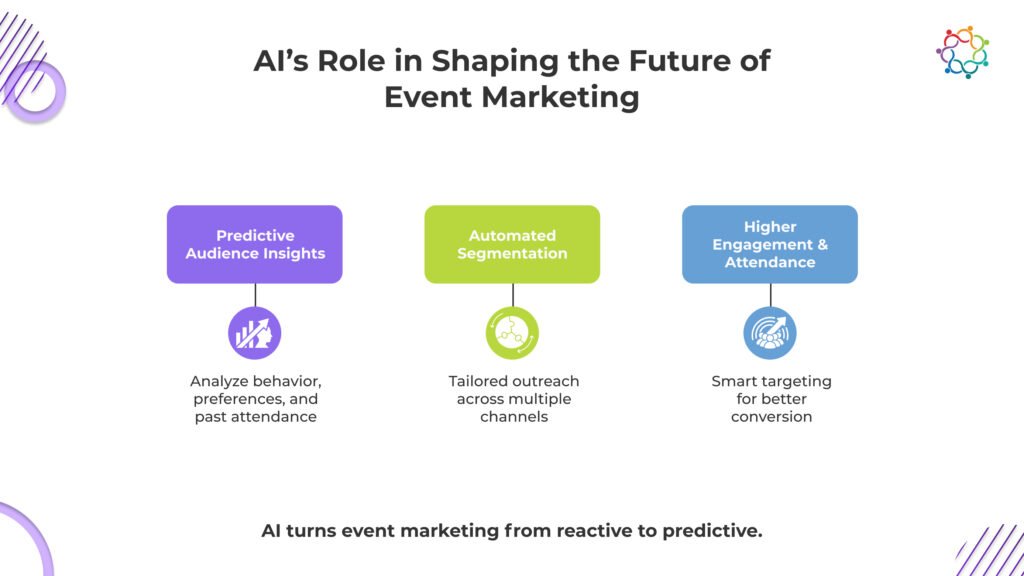
AI has become the intelligence behind every successful campaign. Predictive analytics allows organisers to see who will likely attend or how they will still engage with content and confidently move the audience from interest to action. Automated segmentation refines how you can appropriately target your audiences, ensuring that meeting each communication touchpoint from invitations through to post-event reminders will resonate.
AI chatbots engage attendees at the early stages of the event process by not just qualifying leads but also answering questions in real-time. AI chatbots can also detect sentiment from responses, enabling marketers to see if there is excitement or hesitation so that follow-up can be appropriately tailored. Some organisers have indicated an increase of over 40% registration engagement when adding an AI-driven marketing workflow to their pre-event campaigns.
Omnichannel Personalisation – The New Marketing Imperative
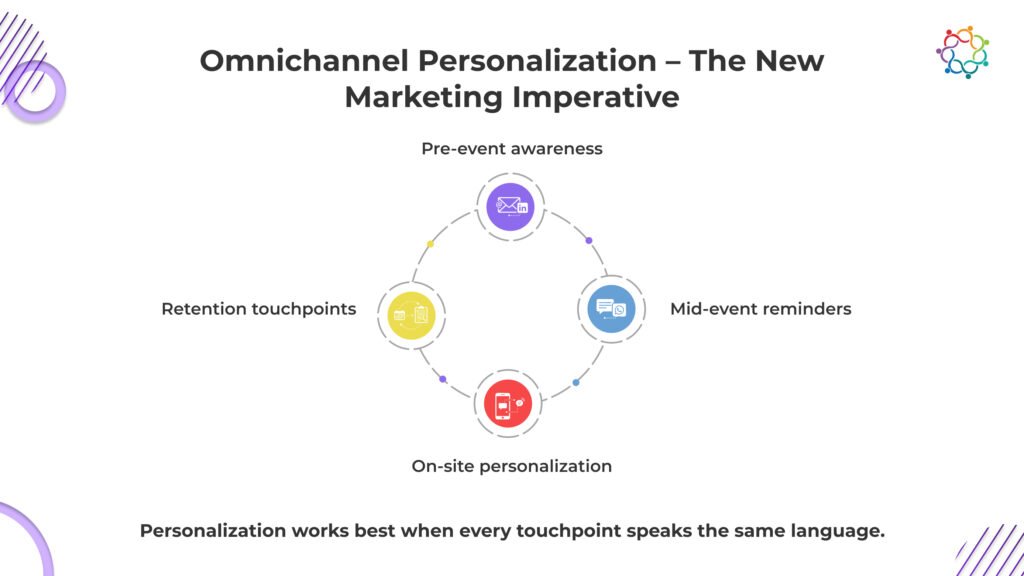
Audiences do not exist anymore exclusively on a single channel. They may have received the initial invite via email, followed the updates on LinkedIn, RSVP’d on WhatsApp, and participated in the event via a mobile application, all the while playing out an attendee journey. This is the direction for the future of event marketing; an omnichannel personalisation of the attendee journey that feels seamless, relevant and consistent at every touchpoint.
AI enables brands to link all these touchpoints and allow for one continuous attendee journey. A BFSI firm, for instance, can track how an attendee is engaging with its email, ads, and mobile app, and build a picture of its preferences, thereby delivering a fully personalised experience. Rather than fussing with outreach across silos, brands are delivering one experience with consistency across platforms, creating comfort and trust.
The Engagement Shift – From Generic Campaigns to Dynamic Journeys
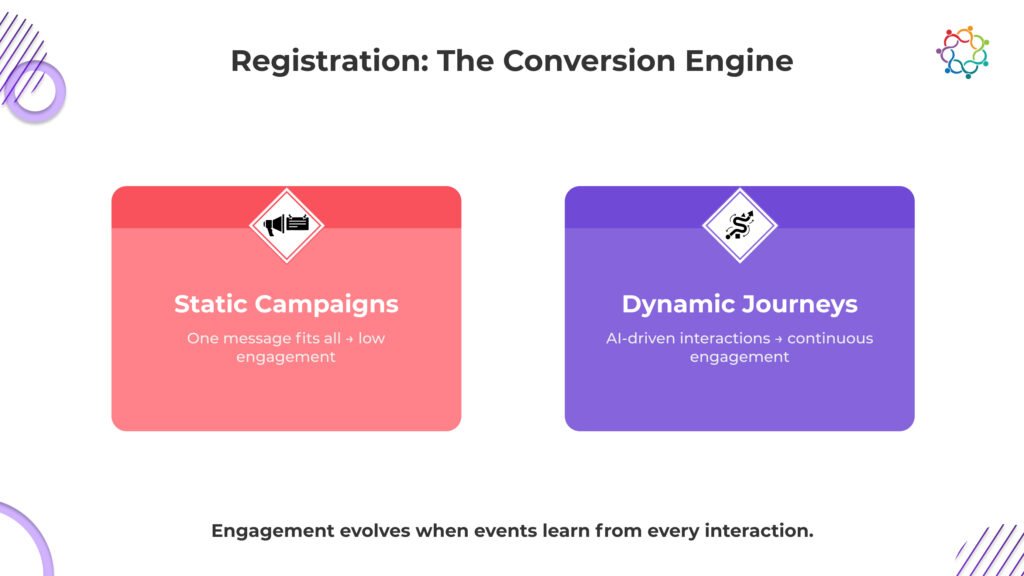
As of 2026, the concept of audience engagement is focused on real-time engagement, not just giveaways or gimmicks. The use of AI to monitor engagement signals delivered during the session and then help modify the event experience is what’s possible. When attention metrics drop, the virtual technology could activate polls, suggest activating a Q&A, or suggest networking ways to boost energy levels.
Also, session attendees could receive intelligent alerts / reminders throughout the event, alerts to sessions that align with their profile and previous interests, alerts when the topic was trending, and alerts to meet the featured speaker. At the event’s close, AI-generated scores would identify which attendees were engaged, allowing teams to easily prioritise follow up and sales conversations that would emerge after the event.
Tools Powering 2026 Event Marketing
The event technology environment in 2026 is increasingly intelligent, predictive and ROI-focused. Organisers are no longer reliant on only a CRM or analytics dashboard; they are leveraging a new generation of AI-empowered event applications and marketing systems optimized for forecasting, automation and decision support. Some of the catalysts of change in this regard include:
- Predictive ROI and Engagement Forecasting: The event platform analyses attendee behaviour, registration posture, and marketing engagement loyalty metrics to predict likely turnout and sponsor ROI before the event occurs. The analytic forecast will support the organiser’s budgeting and resource allocation decisions.
- Intelligent Retargeting and Automated Marketing: The system automatically segments attendees based on behaviour, such as interacting with booths or engaged in the event app. It syncs with a CRM or other email tool to automatically catalogue and deliver automated post-event nurture campaigns – transforming engagement data from the event into an ongoing marketing asset.
- Session and Booth Performance Insights – AI analytic tools will provide intelligence to organisers in real-time about which session or booth are doing the best and provide recommendations such as “extend this session” or “send a push notification to drive booth traffic”.
- Adaptive Content and Experience Personalisation: Dynamic recommendations keep attendees engaged; if a session is missed, the app will suggest another session that is happening concurrently, or if an attendee engaged heavily with sponsors the engine will push related offers immediately.
- Sponsor Intelligence Dashboard: A sponsor facing dedicated view of their engagement, footfall and brand equity value will provide timely metrics to justify renewing and taking up sponsorship up-sell ask.
- AI-powered Staffing and Resource Optimisation: Event management system will be able to predict attendee flow and heighten staff management capabilities to respond without delay to attendee on-demand check-in, help desk or kiosk requirement.
- Cross-event Audience Intelligence: A reporting layer of unified data to track and measure attendee behaviour across events. Identify recurring participants and brand advocates that help clients think of their events as a continued engagement channel.
- Sentiment and Relationship Scoring: AI technology measures attendee sentiment by evaluating feedback notifications and chat experiences and then builds a score reflecting loyalty and engagement health metrics for the organisation to consider.
- Real-time ROI Dashboard: Dashboards relay to the organisers engagement, satisfaction and revenue outcomes to illuminate, what is gaining traction and overall provision of assessment talking point to consider real-time corrective moments during the event.
- Plug-and-smart CRM and Revenue Operations Integrations: A bot or plug and play channel to systems such as Salesforce and HubSpot and other marketing technologies, bridging the moment seamlessly leads move to the sales resume providing sales to revenue operational considerations.
Samaaro Spotlight – AI Meets Personalisation
Samaaro is redefining how brands plan, market, and measure events in the age of intelligence.
The platform brings together AI-driven prediction, omnichannel personalization, and revenue-focused analytics, giving event marketers the power to anticipate, engage, and optimize every attendee interaction in real time.
1. Predictive Marketing Intelligence
Samaaro’s AI engine analyses past event data, attendee demographics, and engagement behaviour to forecast campaign performance before launch.
Marketers can predict likely attendance, engagement hotspots, and sponsor ROI, transforming planning from guesswork into data-backed certainty.
2. Dynamic Omnichannel Campaigns
Promote your event across email, SMS, WhatsApp, and push notifications, all from one platform.
Samaaro’s automation engine ensures every message adapts to audience behaviour: reminding inactive users, rewarding loyal attendees, and re-engaging high-value prospects at the right moment, on the right channel.
3. Real-Time Engagement Scoring
During the event, Samaaro tracks live attendee interactions, session participation, app engagement, and booth visits, assigning each attendee an Engagement Score.
This allows event teams and sales reps to prioritize high-intent leads instantly and trigger personalized follow-ups while interest is at its peak.
4. AI-Powered Content & Experience Personalisation
Each attendee’s journey is dynamically tailored. If someone misses a keynote, Samaaro recommends similar sessions; if they show interest in a specific sponsor, it nudges them toward related offers.
This continuous optimization ensures relevance, reduces drop-offs, and maximizes attendee satisfaction.
5. Unified ROI & Attribution Dashboards
Samaaro connects every touchpoint, marketing, registration, attendance, engagement, and sales, into one unified, visual dashboard.
Marketers can see exactly which campaign drove which registrants, which sessions converted them, and how event spend translated into measurable pipeline value.
6. CRM & RevOps Integrations for End-to-End ROI Tracking
With native integrations into Salesforce, HubSpot, and other marketing tools, Samaaro ensures every event-generated lead flows directly into your revenue pipeline.
This means events stop being a marketing black box and become a verifiable revenue channel.
The Future is Data-Driven, Personal, and Predictive
By 2026, event marketing will be dominated by marketers most successful at marrying creativity with intelligence: on the one hand, Artificial Intelligence (AI) delivers a degree of foresight; on the other hand, omnichannel personalisation accommodates interacting with consumers at every touch point. When applied together, they create for the marketer an opportunity to get rid of vanity metrics, and begin dealing with the things that really mattered, so marketers can create engagement that is meaningful, and not only measurable engagement, but ideally measurable engagement that affects growth.
If you’re interested in futureproofing your event marketing approach to develop smarter, data-driven experiences, check out Samaaro’s AI-ready event platform today- https://samaaro.com/
Frequently Asked Questions
1. What is predictive event marketing and how does AI enable it?
Predictive event marketing uses AI to analyze past behavior and registration patterns, forecasting attendance, identifying likely registrants, and optimizing marketing spend before the event even launches.
2. What does an “omnichannel attendee journey” look like across email, LinkedIn, and WhatsApp?
An omnichannel attendee journey coordinates email, LinkedIn, and WhatsApp into one sequenced experience, where each channel picks up naturally from the last interaction instead of repeating messages.
3. What is an attendee Engagement Score and how is it calculated?
An Engagement Score is a real-time rating combining actions like email opens, session attendance, and meetings booked, ranking each attendee’s interest level for prioritized follow-up.
4. What is a Sponsor Intelligence Dashboard and why does it matter to sponsors?
A Sponsor Intelligence Dashboard gives sponsors a live view of booth traffic, leads, engagement quality, and ROI, justifying their investment with data instead of estimates.
5. How do unified ROI and attribution dashboards connect marketing spend to pipeline value?
Unified ROI and attribution dashboards connect campaign spend, attendee engagement, and CRM pipeline in one view, showing exactly which marketing activities drove revenue.