


Introduction – Why CME Events Can’t Afford Disjointed Systems
Medical events, especially Continuing Medical Education (CME) conferences, operate in a high-stakes environment. For corporate events, the worst outcome may be wasted marketing spend. But CME events are tied to professional licenses, strict compliance requirements, and the credibility of medical associations. A single error in tracking attendance, reporting, or certificate issuance can jeopardize a physician’s career and damage an organization’s reputation.
Despite these stakes, many CME teams still rely on disconnected tools: spreadsheets for registration, paper sign-in sheets for attendance, separate survey platforms for feedback, and stand-alone systems for issuing CME credits.
This fragmentation creates inefficiency, opportunities for error, and frustration. Physicians often spend more time in lines than engaging in the sessions, while certificates get delayed or mishandled.
Even if logistical issues are solved, disjointed systems still pose compliance risks. More than wasted time, they represent a structural weakness, eroding education outcomes, compliance standards, and the trust that holds professional medical communities together.
The High Stakes of CME and Medical Conferences
The value of CME credits cannot be overstated. Physicians and healthcare professionals need them to maintain licenses and practice across specialties. Licensing boards and governing councils require that CME credits come from recognized, approved bodies.
Every detail like attendance records, certificate timelines, and credit allocations must be exact and aligned with regulatory standards. Even a small error can have serious professional consequences.
When systems fail, the impact is immediate. Imagine explaining to a colleague that your CME certificate was delayed because of manual reconciliation, or worse, that credits were misassigned due to tracking errors. The physician is left frustrated, and the association loses credibility within the medical community.
This is not a theoretical problem. Many associations have faced backlash when certificates were delayed for weeks after CME events. Participants were left unsure if their attendance would count toward licensing requirements. Such failures are devastating, especially when tens of thousands of rupees are invested in organizing an event that must uphold accuracy and professionalism.
CME conferences are not just another entry on the calendar. They are pivotal professional milestones for physicians, and their integrity must be non-negotiable.
The Problem of Disconnected Systems
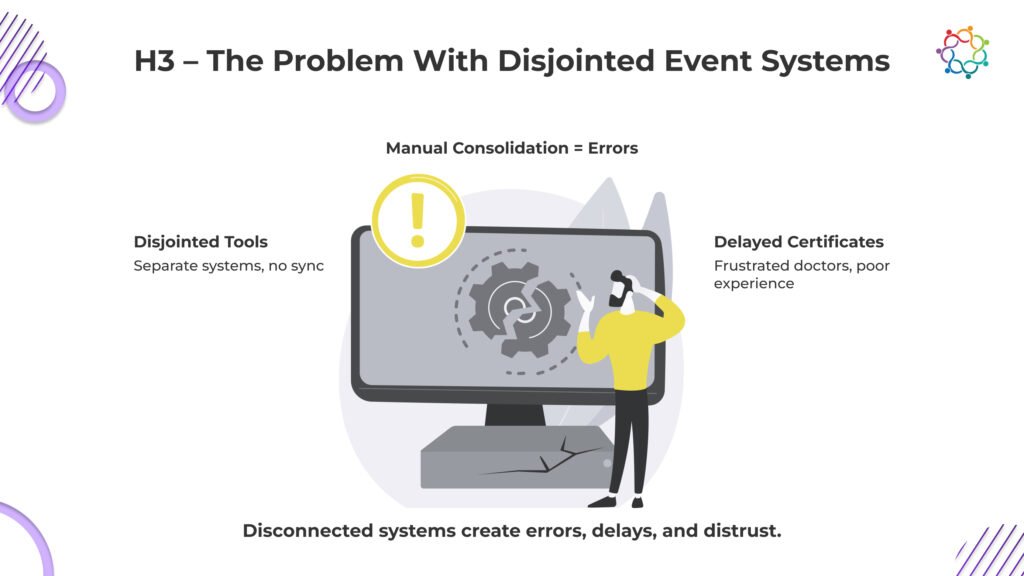
The ultimate cause of these issues is the disconnected way that so many medical conferences are run. Consider just one example of a single CME event. What can happen to a CME event is this:
- Registration – Done through a 3rd party like a form building website or perhaps done even manually if the event organizer used excel spreadsheets.
- Session attendance – Paper sign in sheets, or some outdated scanner to provide tracking.
- Feedback collection – Generic survey website that is disconnected from registration/attendance.
- Certification – Manually prepared certificates based on flimsy attendance data, which a lot of times takes days to reconcile and get certificates printed.
Every transfer/tool connection adds additional risk to the possibility of failure. With manual attendance, there are inevitably typos, names don’t match, or attendance is missed altogether. Your attendees are frustrated waiting long lines at registration and at certificate collection. Your staff are burdened trying to create attendance data in multiple systems rather than focusing on their experience.
Ultimately, the lack of any systems linking does not lend to an efficient process in any form. Your systems do not talk to each other, and even worse, the organizer has no real visibility as to what is going on.
The Primary Problems Faced by Organizers
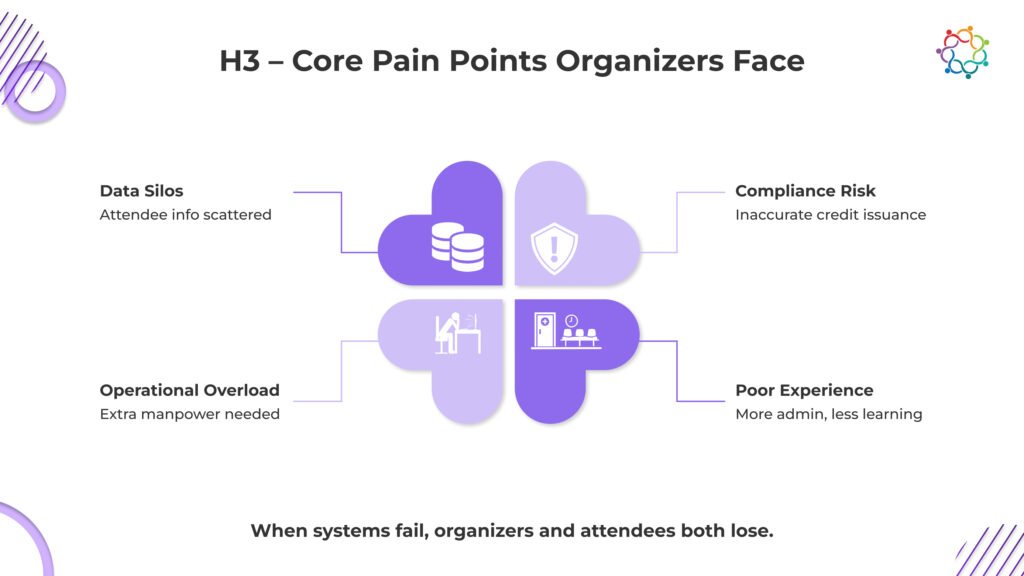
When using unconnected systems, organizers face four key challenges:
1. Data Siloing
Attendee information is spread across different tools. Registration is in one system, attendance in another, feedback in yet another. This makes it nearly impossible to see the full attendee journey or produce accurate reports.
2. Compliance Risk
Mistakes in tracking or certifying attendance can lead to regulatory issues. Even a single typo in credit reporting can put both the physician and the organization at risk.
3. Operational Strain
Event staff spend hours or even days reconciling data between systems. Time and resources that could enhance the learning experience are wasted on manual fixes.
4. Poor Attendee Experience
Doctors don’t come to CME events to stand in lines or chase certificates. Slow, cumbersome processes cause disengagement and damage the trust associations work so hard to build.
Overall, disconnected systems not only create silos and compliance risks, but they also alienate the very audience CME events are meant to serve.
Why Integrated CME Platforms Solve This Problem
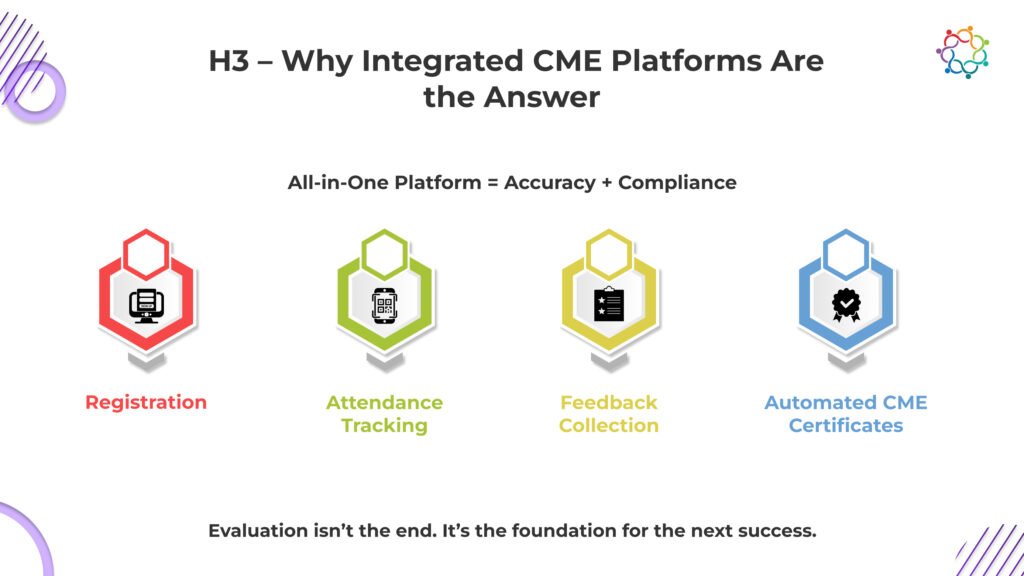
The solution is to have some level of integration or reasonably integrated platform to encompassing the entire CME journey from end to end. Instead of having to manage separate systems for registration, attendance, feedback, and certification, organizers can combine these processes into one easy to use system.
Integrated platforms are changing the way CME events are managed:
- Full Lifecycle Management
Every component from registration to receiving their CME certificate is tracked and recorded in one system. - Real Time Compliance Tracking
Event organizers can see in real time who is in which session, how many credits are earned, and if they have met certification requirements. This eliminates errors and delays. - Automated Certificate
Instead of manual reconciliation the system will automatically issue certificates once the requirements are met and the credits are confirmed. This adds accuracy, speed, and convenience for participants. - Single Dashboards
Event managers, and associations can access a single dashboard with all the data from across the event. No more gathering reports from each of the platforms you used.
In short, while integrated CME platform can’t eliminate errors, it can increase efficiency, accuracy, and participant satisfaction.
Samaaro Spotlight – Purpose-Built for CME Events
Samaaro’s CME-ready event management platform was built to address the exact challenges organizers face, disjointed systems, compliance risk, and inefficient operations.
Here’s how Samaaro transforms CME event management:
- Registrations & Payments – Smooth self-registration with automated payment capture, reducing errors and boosting completion rates.
- Confirmations & Communication – Instant, personalized confirmations via Email and WhatsApp ensure zero communication gaps.
- RSVP & On-Site Check-In – QR code–based check-in and digital door management eliminate queues and deliver a better attendee experience.
- Feedback & Certificates – Mobile-friendly digital forms with automated e-certificates drive higher response rates and instant delivery.
- ROI & Reporting – Real-time dashboards provide visibility into registrations, attendance, payments, and engagement, helping organizers prove ROI and secure future funding.
With Samaaro, CME organizers can be confident their events are compliant, efficient, and truly focused on enhancing the learning experience for healthcare professionals.
From Compliance to Chaos
CME events are not like other conferences. CME events exist in a world in which errors are costly. While a disjointed system may have been tolerable, and even acceptable, in the past, it is now an unnecessary risk.
By having an integrated CME platform, the organizer can transition from chaos to compliance. You can streamline your podcast and video offerings and protect your organizational credibility while providing doctors with a seamless learning experience.
For developers the message is clear- CME event management technology is not an option, it is necessary infrastructure for a successful, compliant and impactful medical conference.
Want to improve you CME or medical event management systems? Learn more about Samaaro today!
Frequently Asked Questions
1. What happens to CME credits already issued if a compliance error is discovered post-event?
Incorrectly issued CME credits may need correction or reissue, and organizers must notify accreditation bodies. Compliance errors risk audits, credibility damage, and extra administrative burden for everyone involved.
2. How does an integrated CME platform verify attendance is accurate enough for licensing boards?
Integrated platforms use automated check-in and check-out timestamps, session-level scans, and duration tracking. Together these create verifiable attendance records that satisfy licensing board requirements.
3. How long does automated e-certificate delivery typically take after a session ends?
With an automated platform, e-certificates typically arrive within minutes of session completion, as soon as attendance criteria are verified. No manual processing or week-long waits.
4. How does QR-based check-in prevent buddy-punching or proxy attendance at CME events?
Each attendee gets a unique QR code tied to their verified identity and scanned at entry. That makes proxy attendance far harder than paper sign-in sheets ever were.
5. What migration support is available for associations switching from spreadsheets to an integrated platform?
Platforms like Samaaro provide onboarding support, data import from existing spreadsheets, template setup, and team training, so associations migrate without losing historical records or disrupting upcoming events.