

Events Still Operate in Functional Silos
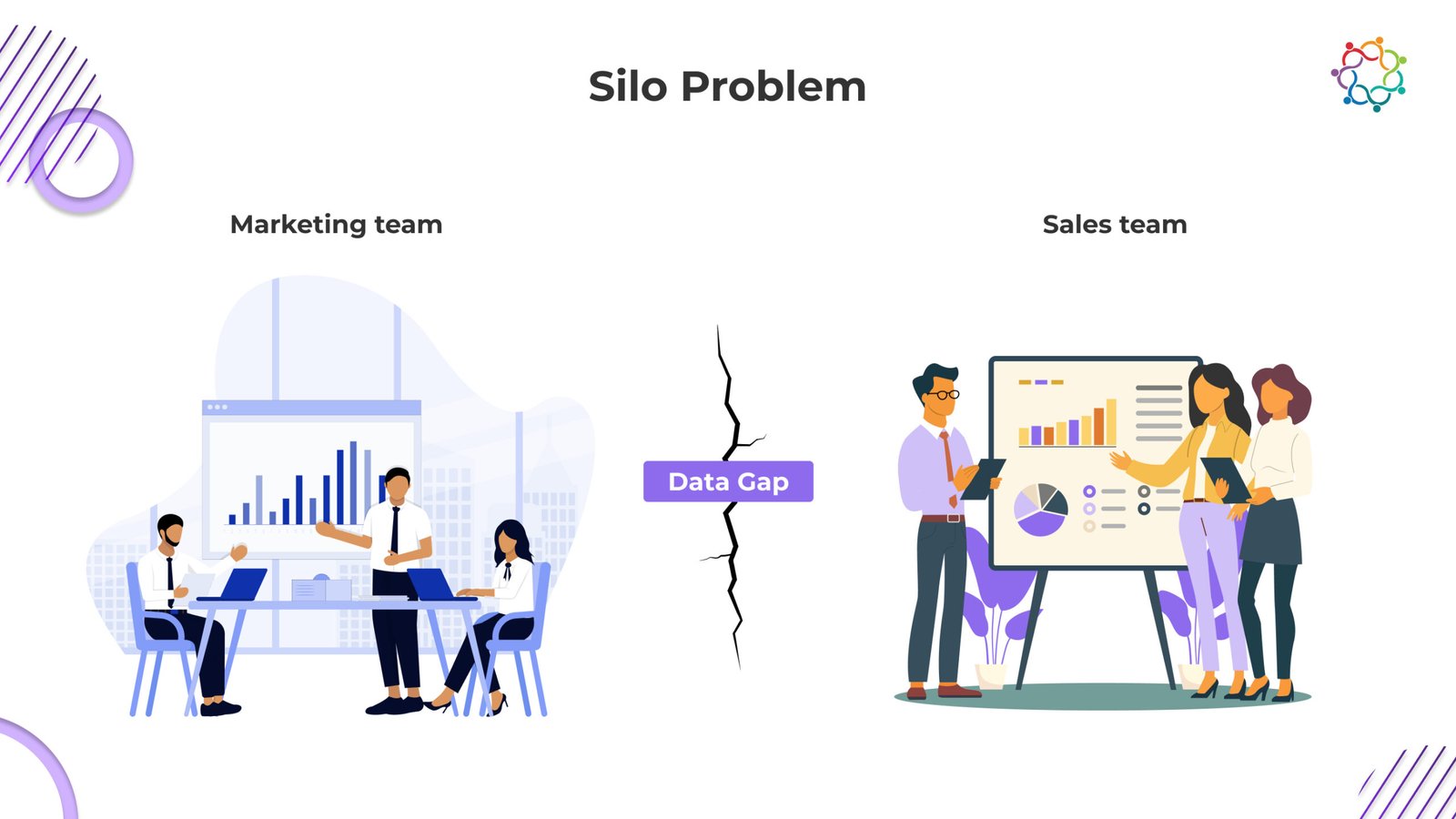
There are two different perspectives on business events. The marketing team wants to build an audience and create a meaningful experience, while the sales team is more concerned with generating income through sales meetings and converting leads into customers. Although both departments benefit from participation in business events, many times there is a gap in the information being shared between the two departments.
Because of this lack of communication between the two departments, there are many missed opportunities in the B2B event strategy. Without a coordinated effort between marketing and sales to properly utilise event engagement data, both departments miss out on valuable information. AI provides the opportunity for both teams to work together and create a common language, a single data set, and a better way to track leads through to eventual income generation.
This blog will provide a breakdown of how AI has bridged the gap in business event ROI that has existed for many years.
Predictive Lead Scoring Based on Engagement Depth
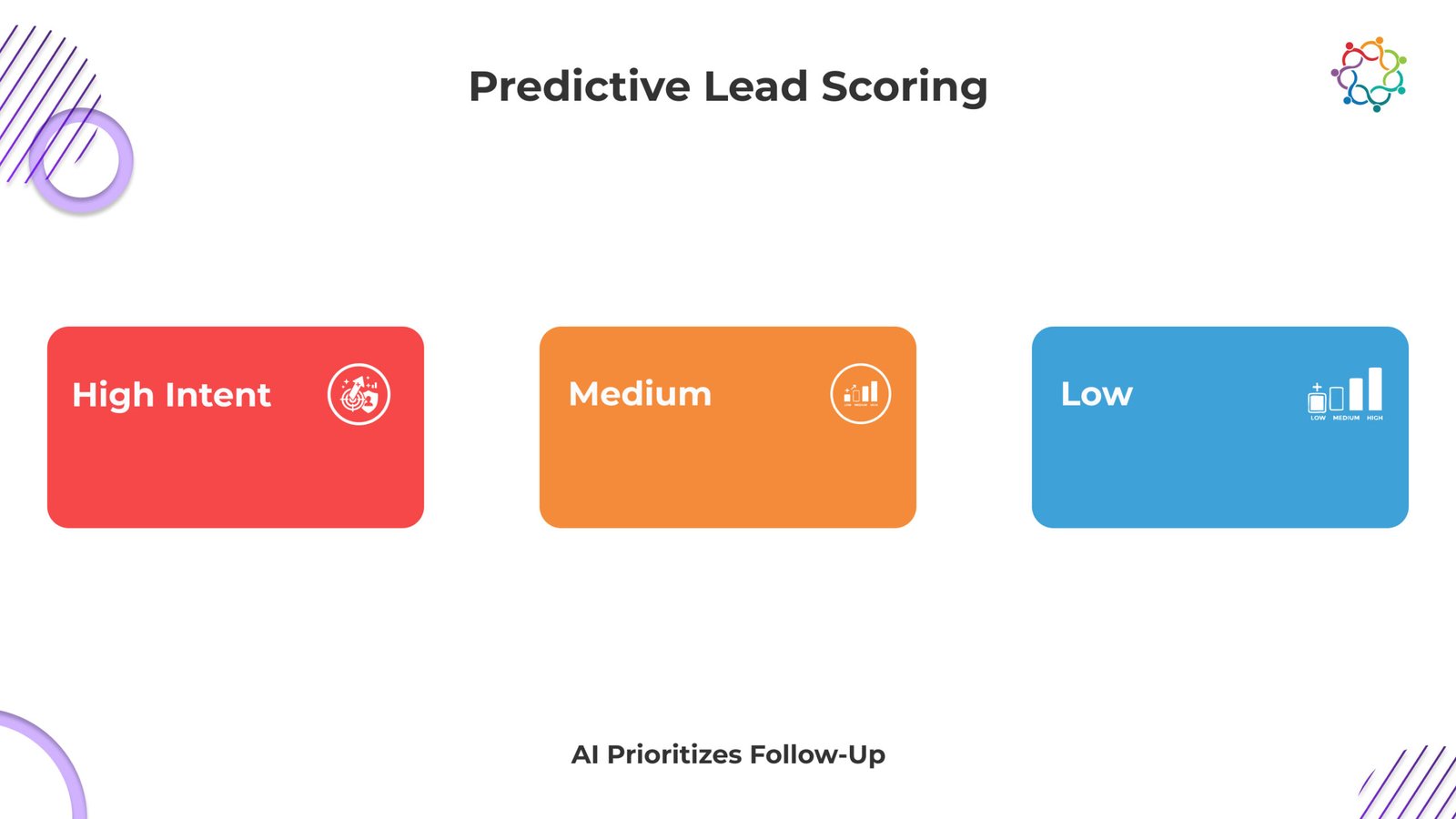
Traditionally, all lead lists for an event are created equally. With AI layered on top of the traditional lists, additional layer(s) of intelligence through customer behaviour data reveal true intent of buying.
Rather than considering engagement through click count or session equal to “surface-level,” AI property evaluates;
- How long did a user spend in a particular session?
- How many times did they view the content repetitively?
- Did they revisit our booth?
- Have they downloaded any collateral from our booth?
- Are there patterns of behaviour in the event-app?
From this, AI can provide a probability-based intent score for every user.
This leads to a much simpler, but far more impactful, process when it comes to assessing follow-up:
- Sales teams will know exactly who to follow-up with
- Marketing no longer sends follow-up emails to people who are not qualified
- Follow-ups are quicker, more precise and don’t require an excessive amount of resources
Predictive-scoring will be used to eliminate guesswork and guide sales efforts to the customer with the highest probability of conversion.
AI-Powered Meeting Intelligence and Routing
There are many significant high-value moments taking place throughout an event such as meetings, product demonstrations and expert discussions however, the vast majority of businesses are unable to match the appropriate attendee to the appropriate person at the appropriate time.
Using AI there is the ability to identify and route attendees to their appropriate representatives automatically.
AI uses information gathered from an attendee’s profile, their industry, their behaviours, and previous experiences to determine who they should be meeting with. AI will identify the appropriate exhibitor for an assigned attendee to meet with. Based on the attendee’s live behaviour signals, AI will suggest what actions are available next.
What This Means:
- If a potential attendee attends a session about a product they are likely to be interested in speaking to the Solution Engineer regarding a service or product offered by that Exhibitor.
- A potential buyer who is highly interested will be routed directly to the appropriate sales person rather than having to wait in long lines.
- Time-sensitive sales opportunities will not slip through cracks.
- AI can serve as a catalyst to organize productive meeting activities rather than gaining simply random ones.
Event Influence Attribution for Pipeline Visibility
Attribution is the source of the greatest amount of friction between the two departments: sales and marketing.
Sales says our pipeline was already working before marketing says any event drove pipeline production.
Leadership is only looking at numbers without seeing how influence played into those numbers.
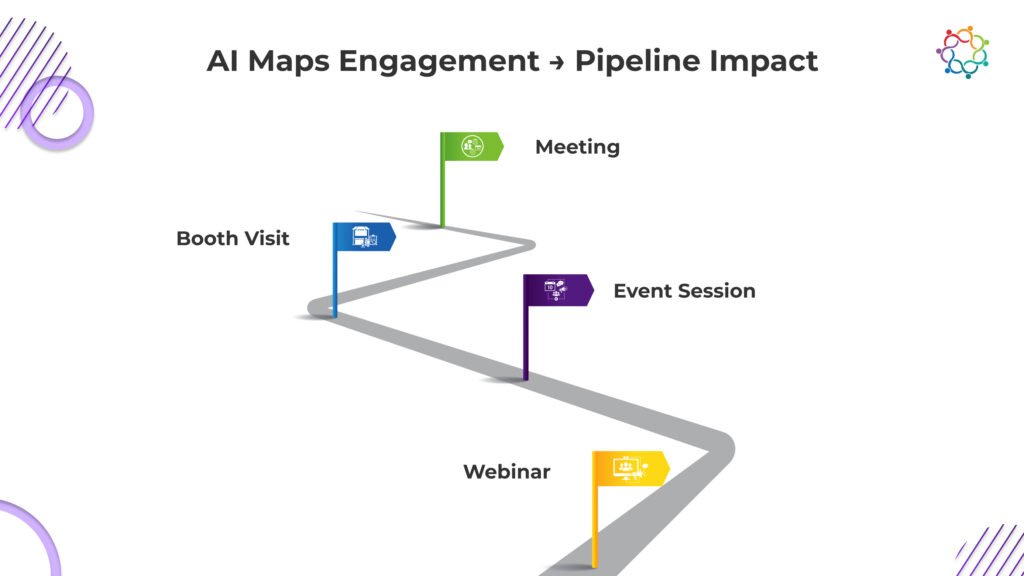
However, with Artificial Intelligence, that all changes; because AI takes behavioural data (engagement info) combined with CRM activity to create a map that displays:
- Who engaged
- Where was the engagement
- What content was consumed
- How did engagement affect the deal stages
With AI, an organisation can create a clear and transparent view of the path that generated revenue; therefore, organisations can track;
- Influenced opportunities
- Deal acceleration
- Meeting to pipeline conversion
- High-impact session and touchpoint
For the first time, the two departments are looking at the same true story instead of looking down parallel paths.
Samaaro Spotlight – Aligning Sales & Marketing Intent Data
Samaaro tackles sales–marketing misalignment by treating event data as a shared intelligence layer, not a departmental artifact.
Built on an AI-driven event operating model, Samaaro connects engagement signals from events directly to sales activity and pipeline outcomes, ensuring both teams operate from the same source of truth.
Instead of fragmented views, Samaaro unifies:
- Session and content engagement
- Booth and meeting interactions
- Buyer intent signals
- CRM updates and deal progression
This creates a single funnel view where marketing understands downstream impact and sales understands upstream intent.
In practice, this enables teams to:
- Prioritise follow-ups based on verified buying intent
- Route high-value attendees to the right sales roles at the right time
- Attribute pipeline influence to specific event touchpoints
- Reduce friction caused by conflicting reports and assumptions
Samaaro doesn’t replace sales or marketing tools, it synchronises them around event intelligence, allowing alignment to emerge from data rather than coordination meetings.
Alignment Is a Data Problem AI Can Solve
For many years, enterprises have worked to close the gap between sales and marketing by having meetings, creating processes and communicating better. The main issue, however, has always been fragmented intelligence.
With unified engagement data, artificial intelligence can provide insights into potential customer types, automate routing of leads and connect activity to revenue, enabling businesses to achieve sales-marketing alignment without having to manually create it through communication or the use of other tools.
Artificial Intelligence can convert event data from a series of isolated, one-time occurrences to a systemic, continuous model that supports ongoing efforts to generate revenue. Event-based alignment is no longer a choice for today’s enterprises; it is a critical component of ongoing revenue growth based on event-driven models.
Frequently Asked Questions
1. Why do sales and marketing teams often operate in silos during enterprise events?
Sales and marketing operate on different goals, systems, and timelines during events. Marketing optimizes attendance while sales works deals, and their data rarely gets fully shared.
2. What behavioral signals does AI analyze to calculate an attendee’s intent score?
AI analyzes session attendance, dwell time, content downloads, booth visits, meeting requests, and question activity to calculate each attendee’s intent score.
3. How does predictive lead scoring reduce wasted follow-up effort for sales teams?
Predictive lead scoring lets sales prioritize high-intent attendees first and skip cold contacts, so every follow-up hour produces more conversations and conversions.
4. How does AI combine engagement data with CRM activity to attribute pipeline influence?
AI merges event engagement data with CRM activity timelines, showing which event interactions moved specific deals forward and quantifying pipeline influence credibly.
5. Why do enterprises still struggle with alignment despite regular sales-marketing meetings?
Meetings do not fix data silos. Without shared systems, definitions, and real-time data, sales and marketing alignment stays verbal instead of operational.