

Why Most Events Never Get Better
Your last event was fine. It went smoothly. Attendees showed up. Sponsors were happy enough.
But was it actually good? Or just fine?
The problem is most organizers never find out. They don’t ask. They don’t measure. They run the same event the same way next year.
Then they wonder why results stay flat.
The fix is simple: pay attention to what your data actually tells you.
Every single registration form is data. Every attendee decision is data. Who signs up, what they choose, when they show up, what they skip. It’s all sitting there.
Most organizers ignore it.
What Registration Data Actually Tells You
Your registration form is collecting way more than names and emails.
Think about what you actually know about each person who registers:
- Location. Which cities are your attendees from? Where’s the bulk of your audience?
- Job title. Are you attracting the decision-makers you want? Or just random people with the wrong titles?
- Industry. Which sectors do they represent? Is your event balanced across industries or heavily skewed one way?
- Session preferences. Which topics do people actually care about? Which ones get zero interest?
- Dietary needs. Who needs accommodation? What are you actually serving?
- Ticket type. Are people going for premium tickets or just the cheap option?
- Company size. Are your attendees from startups or enterprises?
One registration form. But multiple data points per person.
Now multiply that by 500 or 5,000 attendees. You’ve got a massive dataset.
Most organizers never look at it.
How To Actually Use Registration Data: Make Your Forms Work Harder
Your registration form doesn’t have to be static. It can change based on answers.
Someone selects a VIP ticket? Show them different pricing, different perks, different expectations.
Someone says they’re a CTO? Offer networking sessions with other CTOs. Recommend relevant content.
Does someone indicate they have dietary restrictions? Pre-flag them for catering. Don’t surprise them on the day.
The form adapts to each person. Not everyone sees the same thing.
Personalize Before The Event Starts
You know someone registered for your marketing track. Send them emails about the marketing sessions. You know someone’s from Delhi. Send them logistics info about getting to the venue in Delhi. You know someone’s never attended before. Send them “first-timer’s guide” information.
Generic pre-event emails are noise. Personalized emails get opened.
The data lets you personalize.
Pick Better Speakers and Topics
Look at your session preference data.
- Which topics got the most registrations? Those sessions should be in premium slots.
- Which topics nobody picked? Cut them next year or repurpose them.
- Which sessions were most attended during the event? Do more of those.
- Which sessions had people leaving early? Something was wrong. Fix it.
Your data tells you what actually resonates.
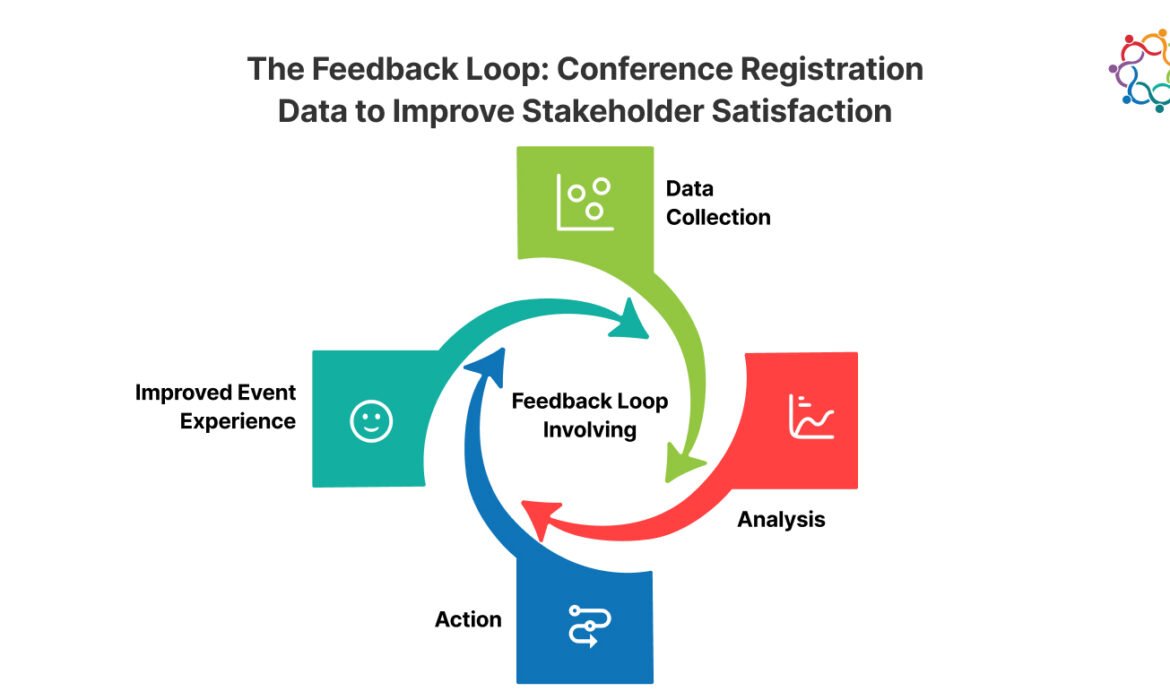
The Real Power: The Feedback Loop
Registration data is the start. But here’s where it gets good.
You have registration data going in. You have event data during the event (attendance, booth visits, engagement). Then you survey after.
That’s the loop.
Registration tells you what people said they wanted. Event data tells you what they actually did.
Post-event surveys tell you if they were satisfied.
When you layer all three together, you see the truth. Maybe people said they wanted X but actually attended Y. Your planning was off. Maybe people attended Y but left unsatisfied. Your content was wrong. Maybe attendance data shows one sponsor booth was packed while another was empty. That tells you which sponsorship model works.
The loop reveals what actually happened versus what you thought would happen.
What To Ask After The Event
Don’t ask generic satisfaction questions.
Ask specific things:
- Which sessions did you attend?
- Which sessions would you attend next time?
- Did the venue work for you?
- Was the food adequate?
- Would you recommend this event to a colleague?
- What one thing should we change?
These aren’t fluff. They give you actionable feedback tied to actual behavior.
Someone says “great event” in a survey but skipped half the sessions? They’re being polite. The data tells the real story.
What You Actually Do With This
Better Content Selection
You know which topics people actually want because they registered for them, attended them, and said they’d recommend them.
Next event, you double down on those topics.
Better Marketing
You know which job titles show up. Which industries. Which company sizes.
Next event, you target those exact people.
Stop marketing to everyone. Market to your people.
Better Sponsor Value
You know which booth got traffic. Which speakers got crowds. Which networking sessions worked.
Sponsors pay for results. Show them the data. Prove the value.
Better Logistics
You know dietary needs from registration. Attendance patterns during the event. Pain points from surveys.
Next event, you fix the painful stuff.
The Bottom Line
Every event you run gives you data. Most organizers throw it away.
Registration data. Attendance data. Survey data.
Stack them together and you’ve got a complete picture of what worked and what didn’t.
Then you improve. Deliberately. Based on facts.
That’s how events get better. That’s how you move from “fine” to “actually good.”
The data is there. You just have to use it.